
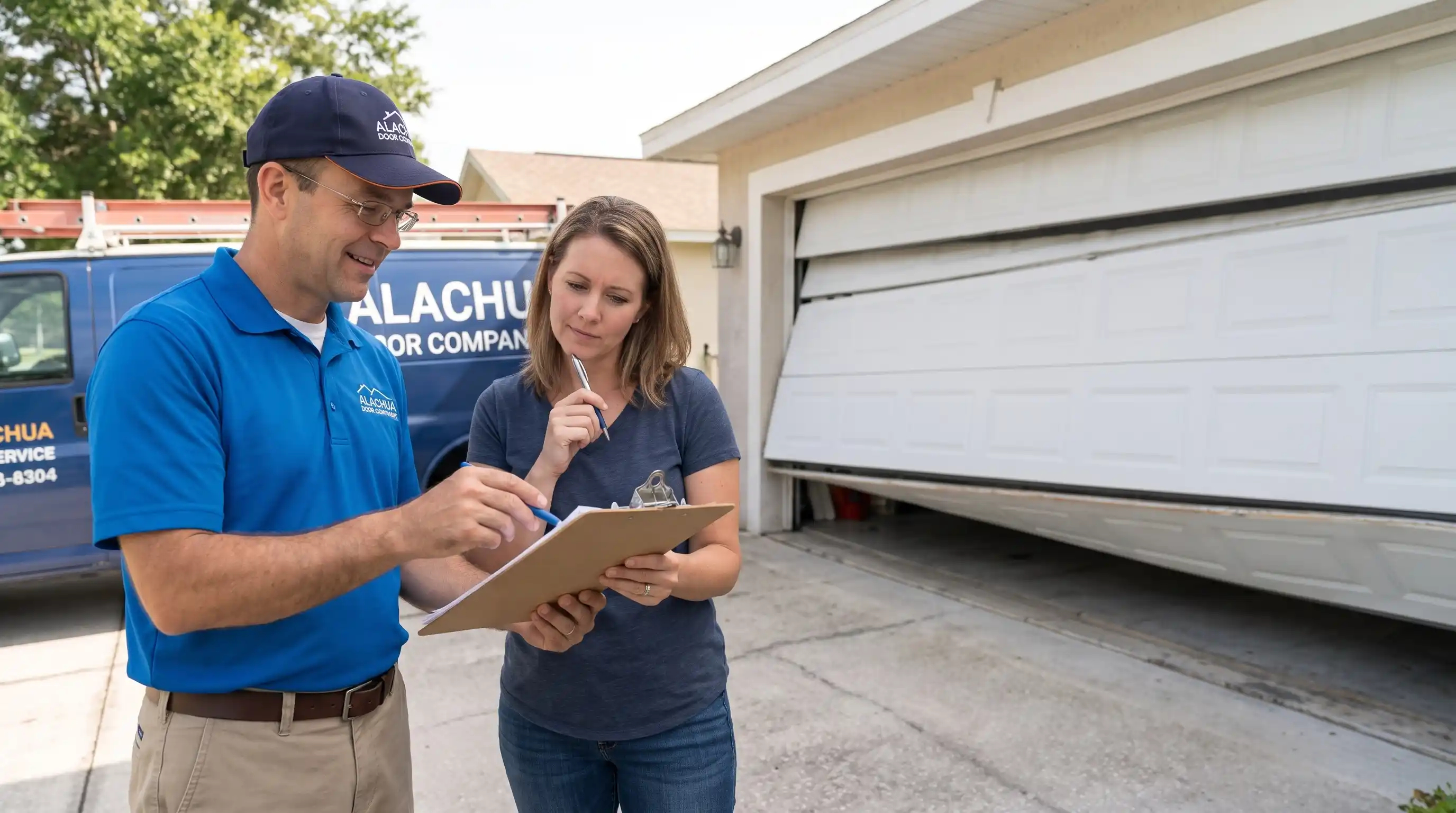
Garage door repair estimates should include the service call fee, labor charges, parts, the scope of work, warranty terms, and payment terms in writing. Written quotes protect the homeowner from surprise charges, since the final invoice should reflect every line that was approved before the work began.
Vague quotes bundle multiple charges into one number, making it hard to compare companies or question an unexpected total after the visit. This guide walks through each line a clear estimate should list, what it covers, and the warning signs of a quote that leaves details out.
Key Takeaways
- The service call fee covers the diagnostic inspection and first hour of labor
- Labor and parts appear as distinct lines on a clear quote
- Scope of work wording defines exactly what the price includes
- Warranty and payment terms belong in writing before approval
- Bundled lines and missing details are warning signs worth questioning
Line Items on a Garage Door Repair Estimate
Garage door repair formats differ between companies, but a readable estimate breaks the price into the same core lines for the homeowner to review.
| Estimate Line | What It Covers | What a Clear Quote Shows |
| Service call fee | Diagnostic inspection and the first hour of labor | A flat fee of $50 to $80 and what it includes |
| Labor | Technician time beyond the first hour | An hourly rate or flat labor charge |
| Parts | Components needed to complete the repair | Each part by name with its own price |
| Scope of work | The exact repair being approved | A written description of the work and its limits |
| Warranty | Coverage on parts and labor | The length of coverage and what it excludes |
| Payment terms | Deposit, balance, and due dates | The accepted payment methods and timing |
To compare a quoted total with typical market ranges, read our guide on How Much Does Garage Door Repair Cost in Gainesville?, which lays out the price of common repairs, from springs to panels, along with the base fees behind each range.
Service Call Fee
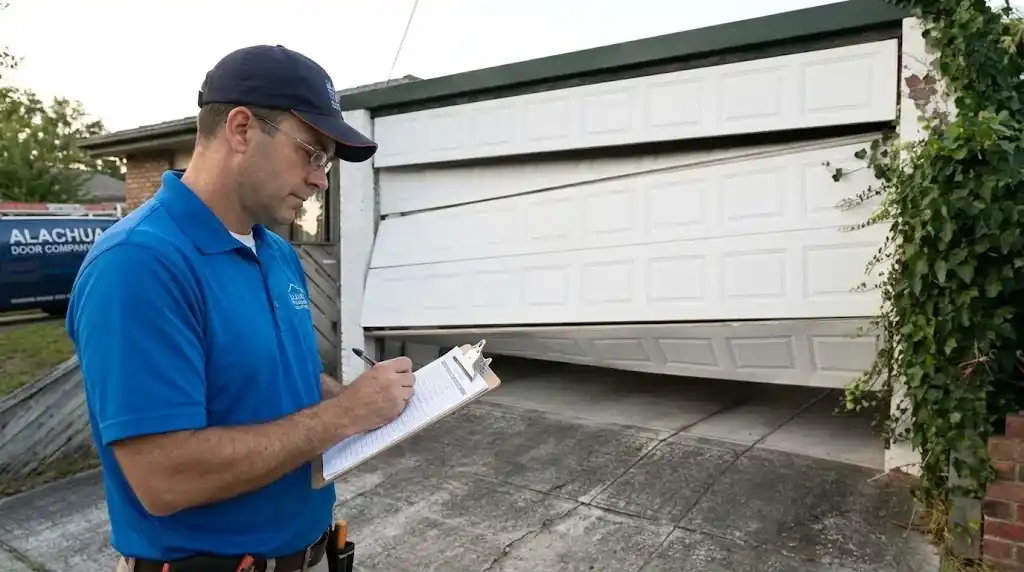
Service call fees of $50 to $80 usually cover the diagnostic inspection and the first hour of on-site technician time, so the failed part can be identified.
Fee wording on a clear quote names:
- The flat amount charged for arriving and diagnosing
- Whether the first hour of labor is included
- Credit toward the final price when the repair goes ahead
- Travel or distance charges, when they apply
- Upfront pricing for the repair once the diagnosis is complete
Evening and weekend calls for emergency garage door repair usually carry a premium, and the estimate should label it clearly next to the base fee.
Labor Charges
Labor charges reflect local labor rates and cover technician time beyond the first hour, priced as an hourly rate or a flat amount for the whole job.
Labor lines on an estimate include details such as:
- The hourly rate or the flat amount quoted for the job
- Estimated hours for each stage of the work
- Minimum charges for short jobs such as minor repairs or a simple fix
- Extra labor for two-person lifts on heavy doors
- Total labor costs shown as one line, next to the parts total
To pinpoint how labor rates, door type, and extent of damage move a quote, read our guide on What Factors Affect Garage Door Repair Cost in Gainesville?, which explains how parts, rates, and the damage involved set the total price.
Parts and Materials
Parts can make up a significant portion of the bill, so list each component as a named item with its own price on the written estimate.
Itemized parts lines typically show:
- The name or model of each spring, cable, roller, or sensor
- The quantity of each part and its individual price
- Whether parts are new, refurbished, or manufacturer-rated
- Hardware, seals, and insulation parts that support the home’s energy efficiency
- Disposal of the old parts removed during the repair
Listing the exact components behind garage door replacement parts, from cables to fittings, lets a homeowner confirm each charge against the final invoice.
Scope of Work
The scope of work states exactly which repair the price covers, which prevents added tasks from appearing on the invoice after approval.
Written scope wording should address:
- The failed part and the repair type being approved
- Whether the quote covers full panel replacement or a single section
- Related hardware, such as rollers behind noisy tracks, included or excluded
- Testing and balance checks confirming the door is left in good shape
- Conditions that would change the price, such as a small problem found during the repair
To decide whether a quoted scope of work points toward repair or replacement, read our guide on Is Garage Door Repair or Replacement Cheaper in Gainesville?, which weighs door age and repair history to show where each option costs less.
Warranty Terms
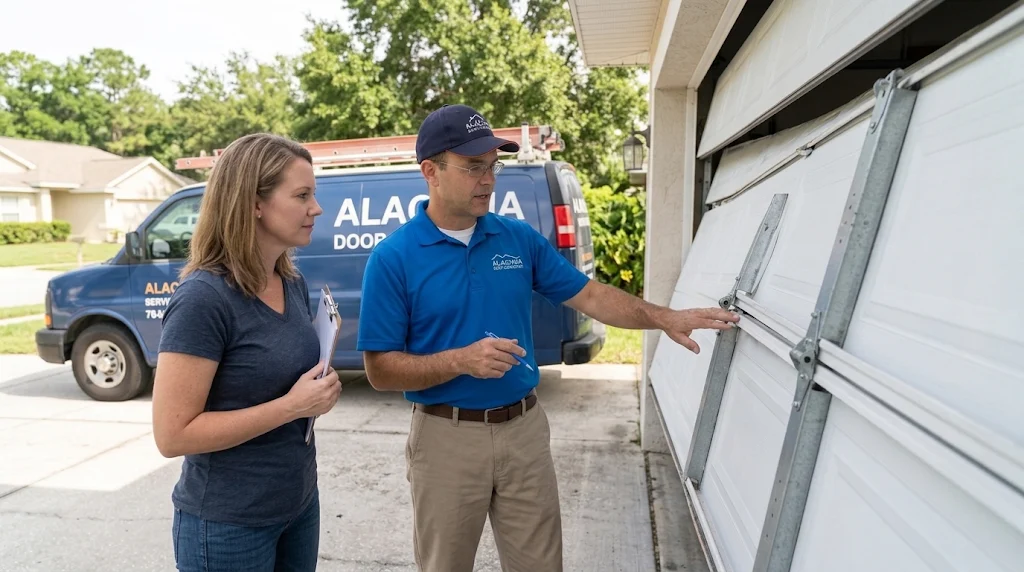
Warranty terms define how long parts and labor stay covered, protecting your investment if a covered problem reappears after the repair.
Coverage details worth confirming include:
- The length of coverage for parts and for labor
- Which failures, including minor problems after the repair, qualify for a free follow-up visit
- Exclusions such as misuse, storm damage, or modified hardware
- The process for requesting warranty service
- Whether coverage transfers if the home is sold
Manufacturer warranties may require records of garage door maintenance to stay valid, so service paperwork protects the coverage over the life of your door.
Payment Terms and Timeline
Payment terms and timeline explain when payment is due and when the work will start and finish, keeping expectations aligned.
Payment arrangements stated in writing cover:
- The deposit amount, if one applies, and when it is due
- The balance due on completion, which is common for simple repairs
- Accepted payment methods, including cards and checks
- The expected start date and completion window
- Access needs, such as clearing space where families store household items
Documented payment terms and receipts create a paper trail that supports any later questions about total costs or the work performed.
Warning Signs in a Repair Estimate
Quotes that leave out key details make it harder to verify repair costs, and a few patterns signal that more questions are needed.
Red flags that call for questions before approval include:
- Bundled lines with no labor or parts breakdown
- No written scope of work for the repair
- Pressure to approve a new garage door when only a repair was requested
- Add-on charges appearing after the work is approved
- Payment demands with no written terms or receipt
Questioning these gaps before approval avoids unnecessary expenses and keeps the final invoice aligned with the quote that was originally approved.
Itemized Estimates Keep the Repair Budget Predictable
Estimates that list the fee, labor, parts, scope, warranty, and payment terms give homeowners everything needed to approve work and compare companies confidently. With transparent pricing in writing, homeowners can easily verify the average cost of a repair and question any added charge early.
Alachua Door Company prepares repair estimates for Gainesville, FL customers, with fees, labor, parts, and warranty details stated clearly before any work begins and before any approval is requested. Contact us or give us a call today to request a written estimate for the repair the door needs, along with a clear explanation of each line.


