
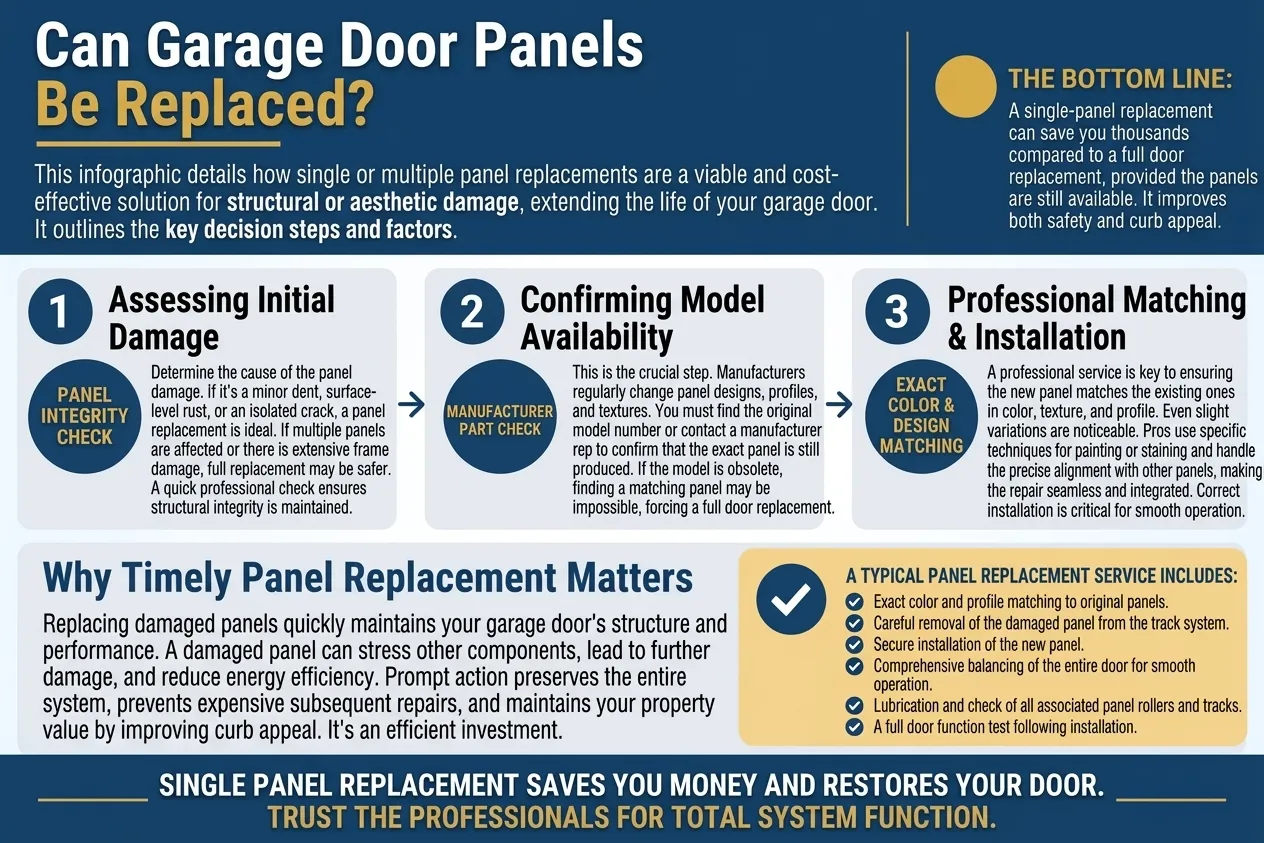
A damaged garage door panel can be replaced on its own, without needing a full door swap, as long as the surrounding sections stay in good condition. Deciding whether to replace one panel or the entire door depends on the extent of the damage, the age of the surrounding panels, and whether an exact match is realistically available.
Scheduling a garage door panel replacement typically costs less than replacing the entire door, especially when the surrounding hardware remains undamaged. This guide covers the signs, key factors, and steps involved in getting a panel replaced correctly from start to finish.
Key Takeaways
- A single damaged panel can often be replaced without touching the rest of the door
- Dents, cracks, and rust rank among the most common types of panel damage
- Matching an older door’s panel color and style takes extra research and effort
- Full door replacement becomes the better option once damage spreads widely across panels
- Professional installation protects against spring tension and other structural issues
Types of Garage Door Panel Damage
Garage door panels face several distinct types of damage, and identifying the right one determines the next step.
| Damage Type | Likely Cause | Repair or Replace |
| Dents | Impact from a vehicle or falling object | Repair if shallow, replace if deep |
| Cracks | Age, extreme temperatures, or impact | Replace to prevent further spreading |
| Rust | Moisture exposure on steel panels | Replace if structural integrity is affected |
| Warping | Heat exposure or manufacturing defect | Replace, since warping does not correct itself |
| Faded or peeling paint | Sun exposure over many years | Repair with paint unless the panel is also damaged |
Identifying the damage type correctly saves money and prevents paying for a garage door panel repair that won’t hold up long term.
Factors That Determine When a Panel Needs Repair or Replacement
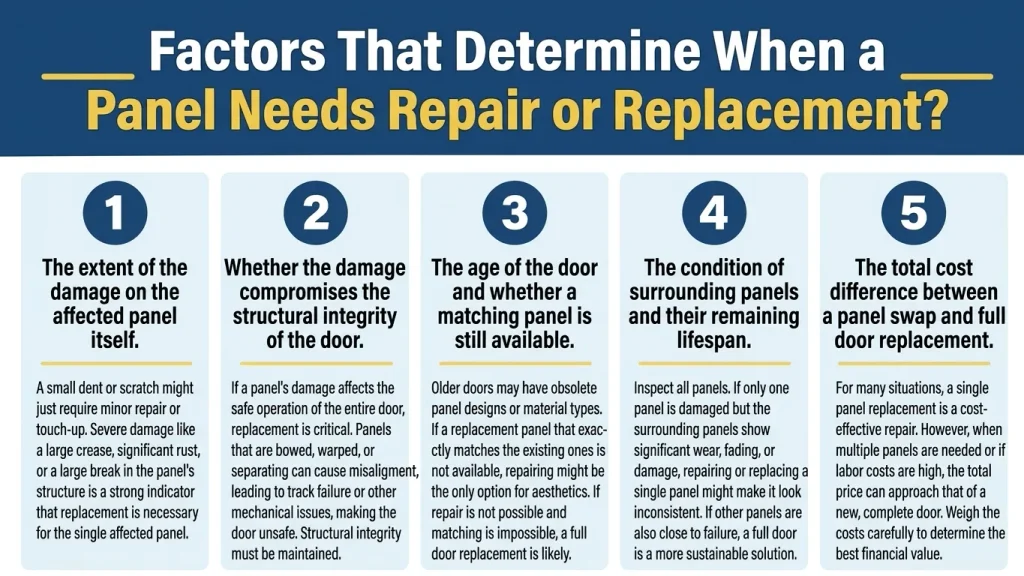
Choosing between repair and replacement depends on a handful of practical factors working together, not a single obvious rule that applies to every situation.
Reviewing the following details clarifies which option fits best:
- The extent of the damage on the affected panel itself
- Whether the damage compromises the structural integrity of the door
- The age of the door and whether a matching panel is still available
- The condition of surrounding panels and their remaining lifespan
- The total cost difference between a panel swap and full door replacement
Settling on the wrong option often costs more in the long run than taking the extra time to assess the damage correctly from the start.
Signs a Garage Door Panel Needs Replacing
A damaged panel does not always look obviously broken, but several signs point to a section that needs more than a quick patch job.
Watch for these specific warning signs on the affected section:
- Visible cracks that continue to spread across the panel surface
- Dents deep enough to affect the door frame or track alignment
- Rust spreading beyond the surface into the structural steel underneath
- Gaps forming between the damaged panel and adjacent panels
- Difficulty operating the door smoothly due to a warped section
To learn which signs point to replacement rather than a simple fix, read our guide on Signs a Garage Door Panel Needs Replacing, which breaks down every warning sign along with what typically causes it.
When to Replace a Single Panel or the Entire Door
Single Panel Replacement
A single panel replacement works well when the damage stays contained to one section and doesn’t affect the rest of the door.
This approach fits best under the following circumstances:
- Only one panel shows visible damage or wear
- The remaining panels stay in good condition overall
- A new panel matching the original color and style is available
- The door frame and track show no signs of additional stress
- The damage resulted from a single, isolated impact or event
Replacing just one panel keeps the total cost contained while fully restoring the door’s appearance and everyday functionality.
Multiple Panel Replacement
Multiple panel replacement becomes necessary once damage spreads across more than one section of the door.
Multiple signs together call for this broader approach:
- Two or more panels show similar damage from the same underlying cause
- Rust or warping has spread beyond a single isolated section
- The bottom panel and an adjacent panel both show visible wear
- Replacement panels remain available for the specific door type
- The overall structure still supports partial replacement safely
Addressing multiple panels in one visit often saves time and labor costs compared with handling each section separately.
Full Door Replacement
Full garage door replacement becomes the more practical option once damage affects most of the door or the door itself has reached the end of its useful life.
A larger investment like this makes sense in a few situations:
- Damage affects the majority of panels across the entire door
- The door is older and no longer supports current energy efficiency standards
- Structural issues extend beyond the panels into the door frame itself
- Labor costs for multiple individual repairs exceed a full replacement cost
- The homeowner wants to improve curb appeal alongside the repair
This option also offers the added benefit of a manufacturer warranty covering the entire structure, not just a single repaired section.
Safety Considerations for Garage Door Panel Replacement
Garage door panels connect directly to spring tension and other high-pressure components, which introduces real safety risks during any replacement project.
Taking the following precautions helps prevent an avoidable injury:
- Torsion springs under tension carry a serious injury risk if mishandled
- Heavy panels require proper lifting technique or an extra set of hands
- Safety glasses protect against flying debris during panel removal
- The right tools prevent slippage that could damage the door or a person
- A professional handles spring tension safely without introducing additional risk
Following these safety considerations protects both the worker and the surrounding structure from further, often costly, damage over time.
Preparing for a Garage Door Panel Replacement
Proper preparation before a panel replacement saves time and helps the entire project move smoothly from start to finish without unexpected delays.
Completing these tasks early sets the project up for success:
- Confirming the serial number to identify the exact door type
- Clearing the garage floor of any obstacles near the work area
- Measuring the damaged panel carefully before ordering a replacement
- Checking whether the manufacturer still produces an exact match
- Scheduling any necessary adjustments to the track or opener beforehand
Having a prepared workspace and the correct part already on hand speeds up the entire replacement process considerably for everyone involved.
How Professionals Handle Garage Door Panel Replacement
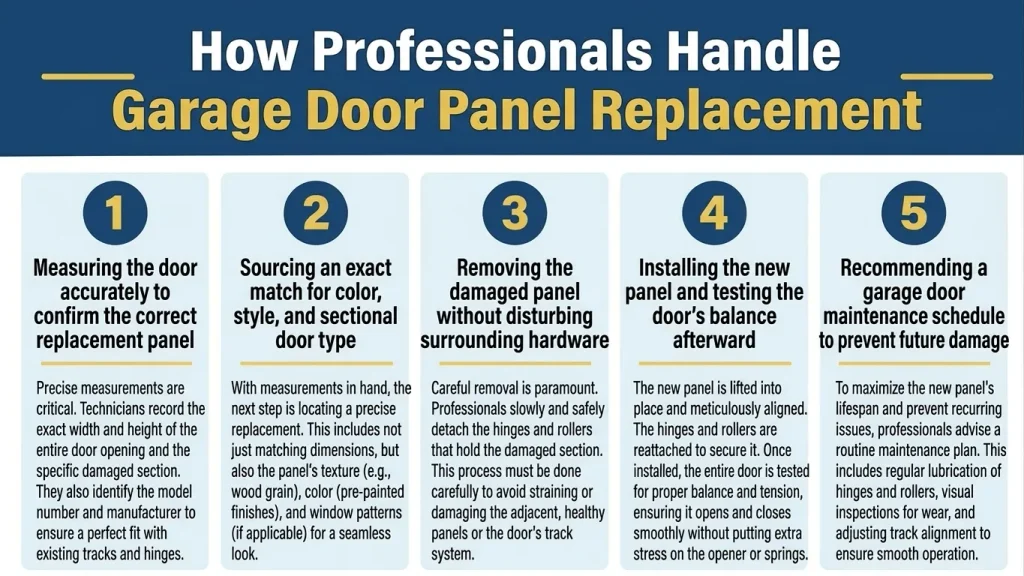
A professional technician brings the tools and access to parts needed to complete the job faster and safer than most homeowners can manage alone.
The process generally unfolds across these specific steps:
- Measuring the door accurately to confirm the correct replacement panel
- Sourcing an exact match for color, style, and sectional door type
- Removing the damaged panel without disturbing surrounding hardware
- Installing the new panel and testing the door’s balance afterward
- Recommending a garage door maintenance schedule to prevent future damage
To find out how a technician confirms the right fit before ordering a replacement panel, read our guide on How to Match a Replacement Panel to an Existing Door, which walks through the entire matching process.
Panel Replacement Restores Function Without a Full Door Overhaul
Replacing a damaged panel restores the door’s full functionality and appearance while avoiding the cost and disruption of a complete overhaul. The right choice between a single panel, multiple panels, or a full replacement depends on the extent of the damage and the condition of the rest of the door.
Alachua Door Company handles panel replacement projects of every size for homeowners across Gainesville with the same careful attention to detail on every single job. Contact us or give us a call today, and let an experienced technician confirm the correct replacement panel for the door.
Frequently Asked Questions
How much does garage door panel replacement typically cost?
Panel replacement costs vary by door type, panel availability, and the extent of the damage. A full garage door replacement generally costs more but may be the better option once damage spreads widely.
What causes garage door panels to become damaged?
Vehicle impacts, falling objects, extreme temperatures, and long-term moisture exposure rank among the most common causes of panel damage. Identifying the specific cause helps determine whether repair or replacement offers the better long-term solution.
How do professionals match a replacement panel to an older door?
Technicians typically use the door's serial number and model information to locate an exact match through the original manufacturer. When an exact match isn't available, color-matching techniques help minimize any visible difference between panels.
Is it safe to replace a garage door panel without professional help?
Replacing a panel involves heavy components and potential contact with tension springs, both of which carry a real risk of serious injury. Professional installation reduces this risk and confirms the door operates correctly afterward.
How long does a typical panel replacement take?
Most single-panel replacements take a few hours, while multiple-panel or full-door replacement projects take longer. The exact timeline depends on parts availability and whether the track or opener needs adjustments.
Can an old garage door still get a matching replacement panel?
Older doors sometimes require contacting the original manufacturer directly, since some models are discontinued after several years. If an exact match isn't possible, a professional can recommend the closest available option for color and style.
What is the most common type of garage door panel damage?
Dents from vehicle impact or falling objects rank among the most common types of damage reported across residential garage doors. Cracks and rust follow closely behind, often developing gradually rather than from a single incident.
Does replacing one panel affect the rest of the garage door’s functionality?
A properly installed replacement panel should not affect your garage door’s functionality as long as the installation matches the original specifications. A professional tests the door’s balance and operation after installation to confirm everything works correctly.
When does a damaged panel require immediate attention instead of routine garage door maintenance?
A damaged panel needs immediate attention when it affects the door’s structural integrity, track alignment, or opener function. Waiting too long on this type of damage often leads to additional issues that require more extensive repair later.


