
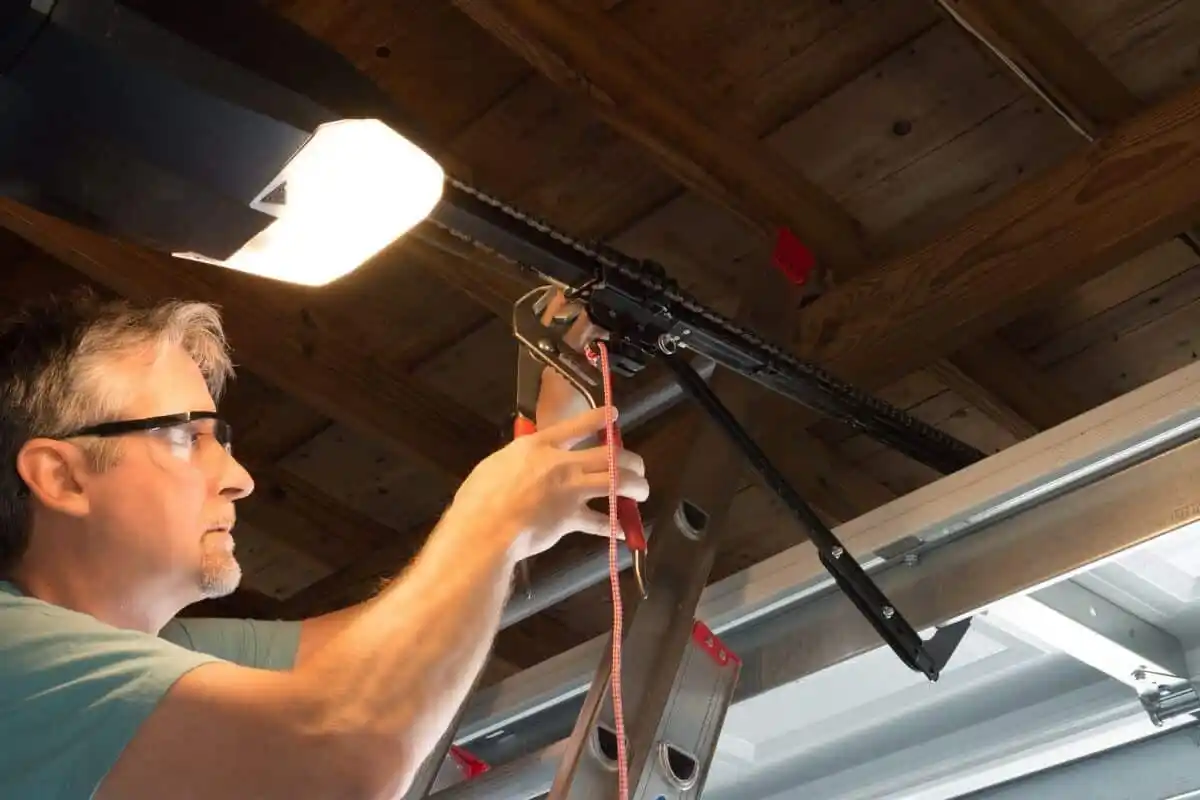
Garage door repair costs average $150 to $350 total, with base service call fees of $50 to $80 that cover the diagnostic inspection and the first hour of labor. Local wind-load requirements and part availability can push the final invoice slightly above national averages, especially for panel work and reinforced components.
Final pricing depends on which part has failed, from minor repairs like sensor adjustments to full panel replacements that involve heavier parts, longer visits, and more technician time. This guide breaks down costs by repair type, the factors that affect the total, and when replacement makes more sense.
Key Takeaways
- Total repair costs average $150 to $350 for a standard visit
- Base service call fees of $50 to $80 cover the diagnostic inspection
- Springs, openers, cables, tracks, and sensors each carry a distinct price range
- Single panels carry the highest repair range at $300 to $900
- Full replacement runs $700 to $3,500 or more for structural damage
Garage Door Repair Cost by Repair Type
Garage door repair costs depend on the failed part, as springs, openers, cables, tracks, sensors, and panels require different labor and parts.
| Repair Type | Estimated Cost Range | What Affects the Price |
| Spring replacement (torsion or extension) | $120 to $400 | Spring type, door weight, and number of springs |
| Opener motor repair | $100 to $300 | Motor condition and opener brand |
| Cable or chain repair | $120 to $250 | Extent of damage and hardware access |
| Track, roller, or hinge realignment | $100 to $300 | Number of parts and technician time |
| Sensor replacement or repair | $125 to $300 | Wiring condition and sensor alignment |
| Single panel replacement | $300 to $900 | Door type, panel availability, and finish |
The wide ranges within each repair type reflect door size, parts quality, and the condition of surrounding hardware at the time of the service visit.
Spring Replacement
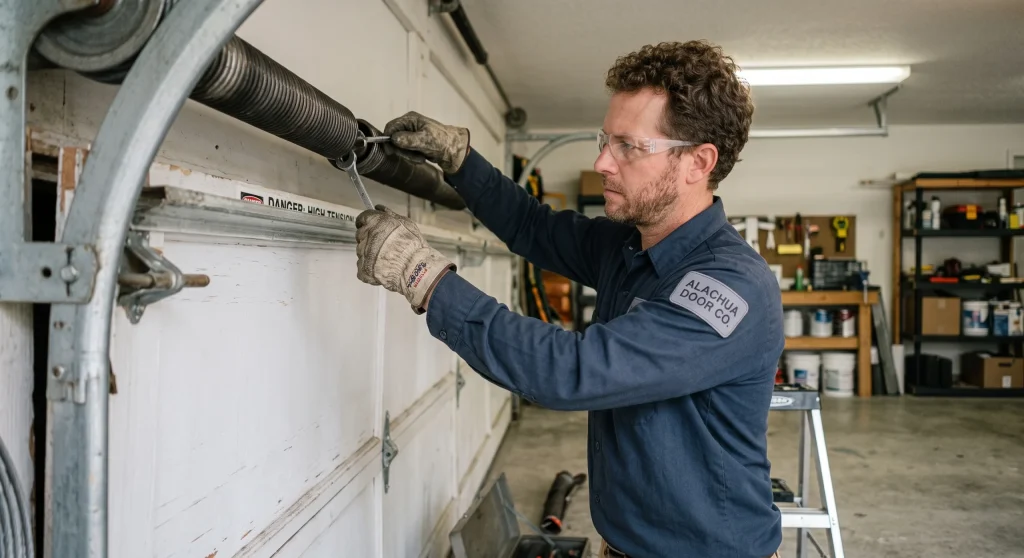
Professional garage door spring repair runs $120 to $400 for torsion or extension spring replacement, depending on spring type and door weight.
Spring jobs land within that range based on:
- Torsion and extension systems carrying different parts and labor prices
- Heavier doors needing stronger springs that raise the replacement parts range
- Replacing both springs in one visit to save technician time later
- After-hours emergency service adding a premium to the base fee
- Stored tension requiring trained handling and proper winding tools
Spring tension demands careful handling, which explains why this repair makes up a significant portion of the bill compared with a simple fix.
Opener Motor Repair
Opener repairs typically cost $100 to $300 per visit, depending on whether the motor, circuit board, or gear assembly has failed and needs replacement.
Common faults that set the price include:
- Worn motors that hum without moving the trolley
- Failed circuit boards that ignore the remote and wall button
- Stripped gears that grind during every cycle
- Misaligned travel limits that stop the door mid-cycle
- Dead receivers that block signals to the garage door opener
Replacing the unit makes financial sense only when repair costs approach the price of a new garage door opener, including the installation labor.
Cable or Chain Repair
Cable or chain repair costs $120 to $250, depending on how much hardware the failure affects and how many sides of the door need work.
Typical work covered by that range includes:
- Replacing a frayed or snapped lift cable on one or both sides
- Reseating a cable that slipped off the drum
- Tightening or replacing a stretched opener chain
- Adjusting drum tension after the cable work is complete
- Inspecting nearby pulleys and brackets for wear during the visit
Straightforward access to the drum and pulleys keeps total labor costs modest, since the technician spends less time reaching the failed part.
Track, Roller, or Hinge Realignment
Track, roller, or hinge realignment costs $100 to $300, depending on how many parts need adjustment or replacement and how far the door has drifted.
Parts that influence the final bill include:
- Bent track sections that need straightening or replacement
- Worn rollers that create noisy tracks during operation
- Cracked hinges that loosen the connection between panels
- Loose mounting brackets along the vertical and horizontal track
- Technician time spent testing smooth travel after the adjustment
Quiet, even door travel after the visit confirms that the realignment addressed the source of the problem and restored smooth operation.
Sensor Repair or Replacement
Sensor repair or replacement costs $125 to $300, depending on wiring condition, alignment settings, and whether one or both sensor units need work.
Faults that bring a technician out for sensors include:
- Misaligned sensor eyes that stop the door from closing
- Dirty lenses that interrupt the infrared beam
- Damaged wiring along the wall between both sensors
- Failed sensor units that no longer send a signal
- Loose brackets that shift the sensor angle
Sensor issues usually fall under the minor problems a technician resolves within the first hour of labor, keeping the visit near the lower end of the range.
Single Panel Replacement
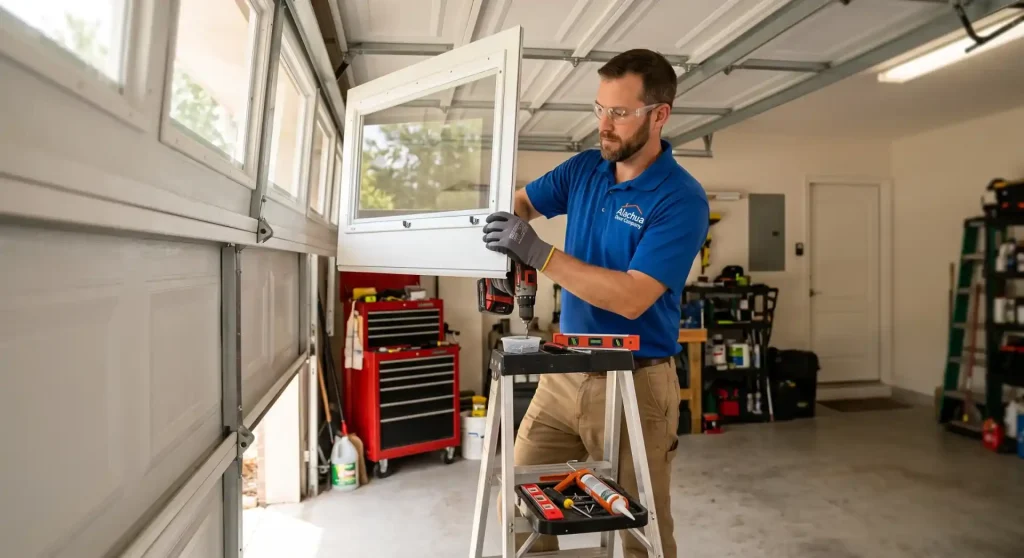
Single panel replacement costs $300 to $900, depending on door type, panel availability, and the specific finish or color required.
Panel pricing responds to details such as:
- Sectional doors that require a panel sized to the existing section
- Insulated panels that cost more than plain steel options
- Discontinued styles that need special ordering from the manufacturer
- Custom colors or finishes that add to the final invoice
- Labor to remove the damaged panel and reinstall the hardware
Full panel replacement stays well below the price of a new door when damage is limited to one section, and the rest of the door can stay in service.
What Do Service Call Fees Cover?
Service call fees of $50 to $80 cover the diagnostic inspection and the first hour of labor, so a professional can identify the failed part.
Base fees typically cover costs such as:
- Diagnostic inspection of the door, springs, and opener
- The first hour of labor on site
- Travel time and fuel to reach the property
- Written explanation of the failed part and repair options
- Upfront pricing that confirms the quote before work begins
To itemize every line on a repair quote beyond the base fee, read our guide on What Does a Garage Door Repair Quote Include in Gainesville?, which covers parts, labor, and the extras worth confirming before approving any work.
Factors That Change the Final Repair Price
Repair costs vary with the door’s condition, the parts involved, and the local labor market, so two similar repairs can be priced differently.
Price changes trace back to factors such as:
- Spring type, since torsion systems cost more than extension setups
- Door type, including insulated and sectional doors that use heavier parts
- Extent of damage, from isolated part failures to multiple worn components
- Local labor rates, which set total labor costs for the visit
- Wind-load requirements that call for reinforced parts and added labor
To examine each cost driver in greater depth, read our guide on What Factors Affect Garage Door Repair Cost in Gainesville?, which explains how labor rates, parts, and the scope of work set the total for each repair.
When Does Full Replacement Make More Sense Than Repair?
Simple repairs stay cost-effective when the door framework remains sound, but structural damage or a worn-out door favors replacement.
Replacement deserves serious consideration in situations like:
- Structural damage to the door sections or the framework
- Doors at the end of their lifespan with wear in multiple places
- Repeated garage door repairs whose combined total pushes the overall expense close to a new garage door
- Professional garage door replacement priced from $700 to $3,500 or more, based on size, insulation, and wind-load rating
- Insulated, reinforced models that improve the home’s energy efficiency and wind resistance
To compare the long-term costs of fixing a door against replacing it entirely, read our guide on Is Garage Door Repair or Replacement Cheaper in Gainesville?, which weighs lifespan, labor, and total expenses for each available option.
How to Budget for Garage Door Repair
Budgeting ahead helps avoid unnecessary expenses and gives homeowners time to compare quotes without pressure when a repair is needed.
Practical ways to plan for repair expenses include:
- Setting aside a repair fund sized to the average cost of $150 to $350
- Comparing two or more written quotes before approving any work
- Yearly garage door maintenance visits that keep springs, rollers, and hinges in good shape
- Bundling minor repairs into one visit to avoid paying service call fees twice
- Addressing a small problem during a routine visit instead of booking a second trip
Preventative maintenance and timely repairs help lower garage door repair costs across the life of your garage door, keeping total expenses predictable.
Clear Pricing Makes Every Repair Decision Easier
Knowing the typical price range for each repair type lets homeowners approve work with confidence and question any quote that falls well outside the expected range. Transparent pricing from the start keeps the final cost close to the quote, from the first diagnostic inspection through the last adjustment.
Alachua Door Company repairs doors for households across Gainesville, FL, including springs, openers, cables, tracks, sensors, and panels, with careful attention to every visit and every part involved. Contact us or give us a call today, and let a technician confirm the repair cost before any work begins.


