
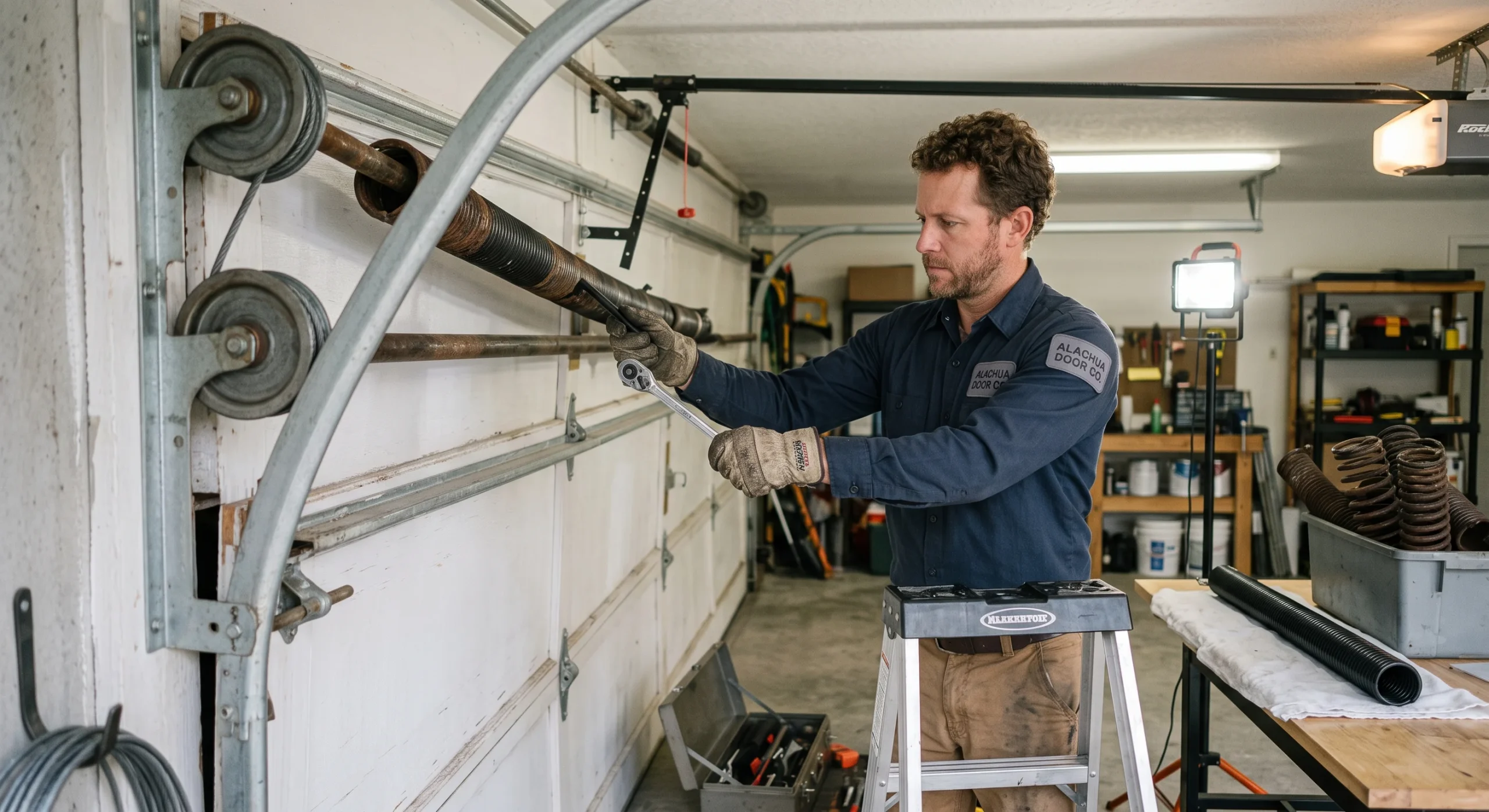
Knowing when to replace springs during garage door installation can help High Springs, FL, homeowners prevent expensive repairs and safety issues in the future. Springs balance the door’s weight, making it easier to move. As they wear out, they can lose strength or break, creating dangerous situations.
If your springs show rust, gaps, or signs of stretching, or if they are over seven years old, it’s wise to replace them during installation. Doing this keeps the new garage door running smoothly, balanced, and reliable. It also lowers the risk of sudden breakdowns and costly service calls later.
This guide will explain the signs, timing, and benefits of replacing springs during garage door installation. Acting early can protect your door, keep your family safe, and give you years of smooth, trouble-free garage door use.
The Role of Garage Door Springs in Your Garage Door System
Garage door springs are the backbone of your garage door system, balancing the weight of the door to make opening and closing cycles smooth and safe.
Without properly functioning springs, your door could feel too heavy, strain the garage door opener, or even risk slamming shut unexpectedly.
Two primary types of springs include:
Torsion Springs
Mounted above the garage door, torsion springs twist to store energy, providing smoother operation and better balance. They are durable, often lasting longer than other spring types, and help ensure safe, efficient opening and closing every time.
Extension Springs
Installed along each side of the garage door, extension springs expand and contract with every movement. They counterbalance the door’s weight, making lifting easier, and with proper care, they provide reliable performance while reducing strain on the garage door opener.
If you hire a professional, ensure they handle both types. See our How to Get Quality Garage Door Installation Near You guide for tips on finding skilled help locally.
How Long Does a Garage Door Spring Last?
One of the most common concerns is how long a garage door spring lasts. On average, they’re made for 10,000 cycles, lasting 7–10 years depending on usage.
Factors influencing lifespan include:
- Frequency of use
- The type of springs installed
- Local weather and humidity levels
- The weight of the door
- Commitment to regular maintenance
For clear advice on budgeting for garage door upgrades or complete installations, see How Much Should You Budget for Garage Door Installation: Tips & Price Ranges to learn about costs and planning.
Signs You Might Need a Garage Door Spring Replacement
Spotting problems early can save you from costly repairs and downtime. Common signs include:

Table showing brief signs of garage door spring issues, including broken springs, heavy door, uneven movement, and opener struggling, with short explanations for each.
For better insulation and performance, consider “Improve Your Garage Door Installation by Adding Top and Side Seals“ and our tips on finding quality garage door installation near you.
What Happens When a Garage Door Spring Snaps?
A snapped garage door spring is more than an inconvenience; it can cause serious safety hazards. Springs store high tension energy, and when they fail, they can damage cables, rollers, or even the door panels.
Potential issues caused by snapped springs include:
- The door is becoming stuck in either position
- Increased strain on the garage door opener
- Higher risk of the door slamming shut
- Additional wear on other moving parts
For easy safety tips and maintenance advice, check the IDA garage door safety guide, which offers simple steps to prevent accidents and keep your garage door working smoothly.
Why Replacing Springs During Garage Door Installation Matters
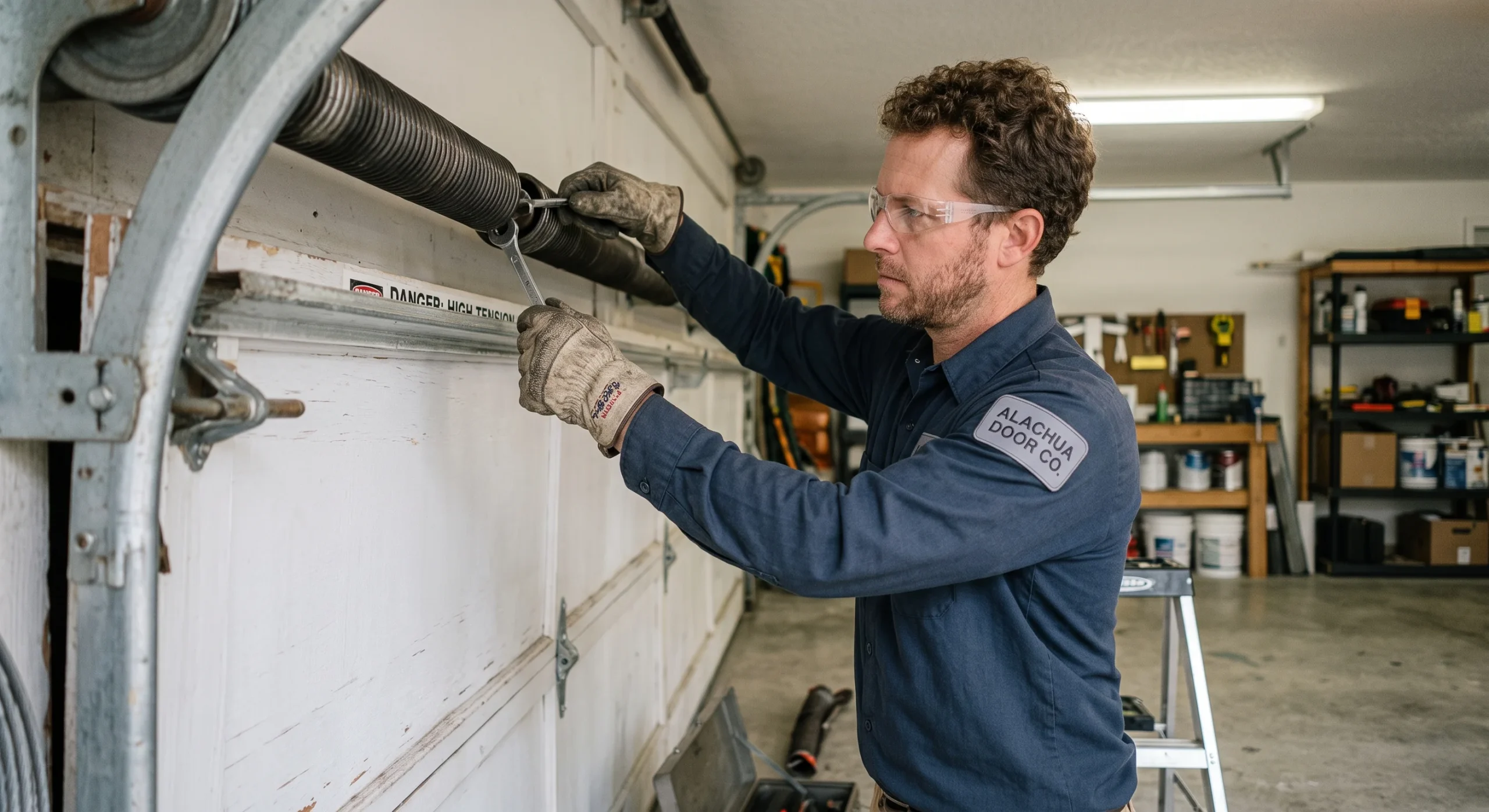
When replacing or upgrading your garage door, it’s often recommended to replace the springs too. Doing both together ensures the springs match the weight of the door, helps extend the life of your system, and improves long-term performance.
Advantages include:
- Balanced and smooth garage door operation
- Reduced risk of early wear on other components
- Opportunity to install higher cycle torsion springs or extension springs
- Increased safety through a complete system refresh
You can explore Amarr Garage Doors for examples of hardware designed for durability and performance.
The Risks of Ignoring Worn Springs
Neglecting springs showing signs of wear and tear can lead to damage across your garage door system. From misalignment issues to costly track damage, a broken spring left unchecked can shorten the lifespan of the entire setup.
Long-Term Performance and Regular Maintenance
Regular maintenance is key to spring longevity. Professional checks help identify worn coils, tension issues, and balance problems before they become serious. This proactive approach keeps your garage door system safe and working well for the long term.
Knowing when to replace springs during garage door installation keeps your door safe and balanced. Worn springs can overwork the opener, move unevenly, and snap. Replacing them during installation helps your garage door work smoothly and last longer.
For homeowners in High Springs, FL, Alachua Door Company offers professional garage door installation with the right springs for your door’s weight and daily use. Our team focuses on safety, performance, and helping you avoid costly repairs in the future.
Avoid the hassle of a broken spring by acting now. Contact us today to learn more and schedule your installation. You can also book online to enjoy a safer, quieter, and longer-lasting garage door that operates smoothly for years.
Frequently Asked Questions
How do I know when my garage door springs need to be replaced?
You might need garage door spring replacement if your door feels heavy, closes too fast, moves unevenly, or you see rust, gaps, or stretching in the springs. Strange noises, like loud bangs, are also signs that a spring may have broken or is wearing out.
Why replace springs during garage door installation instead of later?
Replacing springs during a garage door installation ensures the system is matched to your door’s weight and daily use. This prevents extra strain on the opener, avoids future breakdowns, improves safety, and helps your new garage door work smoothly for many years without unexpected repairs.
Can I replace garage door springs myself?
Replacing garage door springs yourself is not safe. Springs are under extreme tension and require special tools and skills. Without proper training, you could get injured or damage your garage door system. Always hire a qualified technician for this type of work.
How do garage door seals help protect springs?
Top and side seals keep moisture, dirt, and debris out of your garage, which reduces rust and corrosion on garage door springs. This simple upgrade helps them last longer and improves the overall performance and safety of your garage door system.
Can a broken garage door spring damage my opener?
If a spring breaks, the opener must lift the door’s full weight. This can overwork the motor, damage internal gears, and cause the opener to fail sooner than expected, leading to expensive repairs or early replacement.
What’s the average daily use that shortens spring life?
Using your garage door over 4–5 times daily wears out the springs faster. High daily use increases the number of opening and closing cycles, which can shorten their lifespan and require earlier replacement.
How do I keep my garage door springs in good shape for years?
You can extend the life of your springs by having a professional inspect them yearly, keeping them clean, and applying proper lubrication. Installing top and side seals also protects them from moisture, dirt, and rust that can lead to early wear.
Should both garage door springs be replaced together?
Yes, replacing both springs is usually recommended. If one spring has worn out, the other is likely close to failing. Changing both at once keeps the garage door system balanced and prevents another breakdown shortly after the first repair.
How much does garage door spring replacement cost?
The cost of garage door spring replacement depends on the type of spring, your door’s size, and labor rates. Doing it during a door installation is often more affordable since the system is already being worked on, saving time and service fees.
What will happen if I use my garage door with a broken spring?
Operating your door with a broken spring can seriously damage the opener, cables, and tracks. It can also make the door unsafe, as it may suddenly drop or stop working, leaving your garage door stuck in place.