
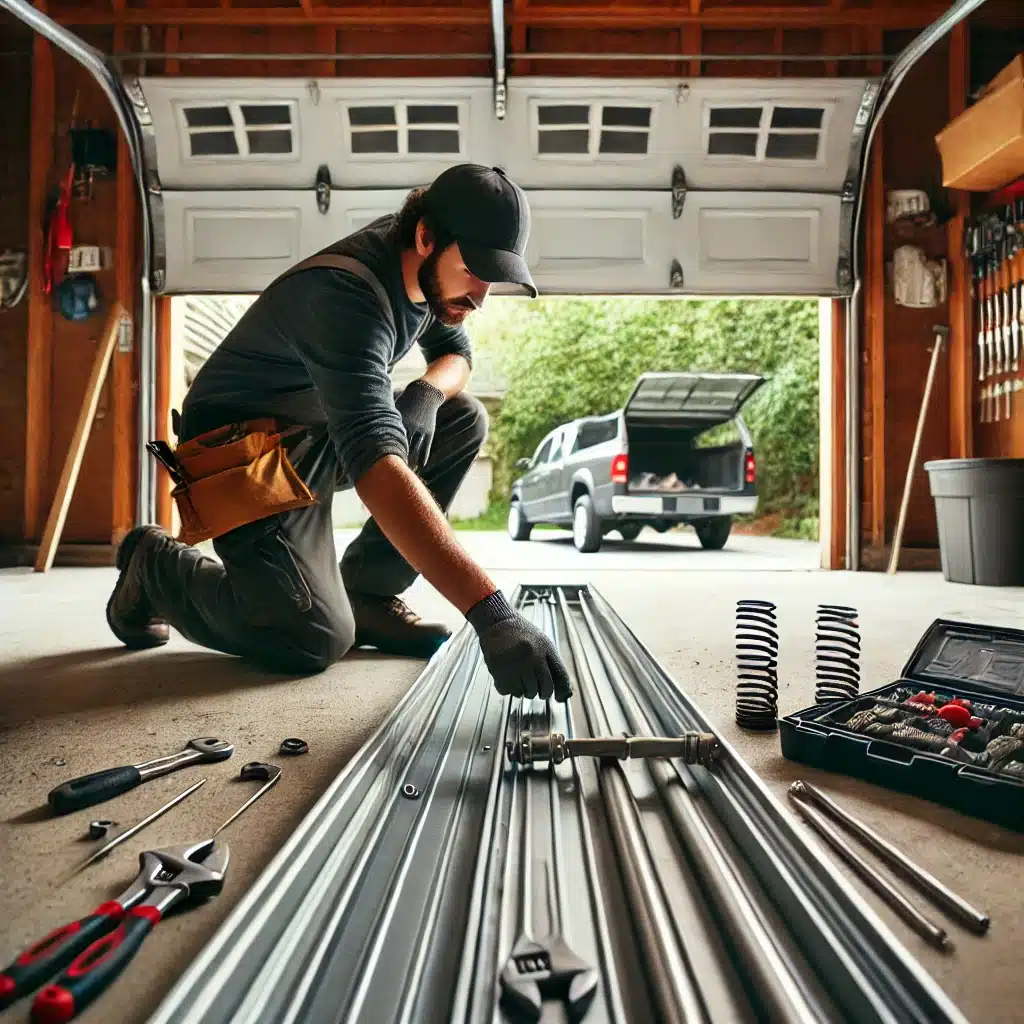
Garage door rollers complete thousands of open and close cycles every year, and that constant movement gradually wears them down. The frequency of garage door roller replacement depends on the type of roller installed, how often the door is used, and how well the system is maintained.
Replacing rollers too late leads to noisy operation, track damage, and added strain on the opener and springs. Knowing the correct replacement timeline for each roller type helps homeowners schedule service at the right time and keep the door running at full performance.

What Do Garage Door Rollers Actually Do?
Garage door rollers are small, wheel-like components that sit inside the tracks on both sides of the door, carrying the full weight of the door panels through every open-and-close cycle the system runs.
Here is what garage door rollers do during every cycle:
- Guides the door panels along the track to keep movement straight and controlled.
- Distributes the door’s weight evenly to reduce stress on hinges and cables.
- Works in tandem with torsion springs to ensure smooth opening and closing.
- Reduces friction between the panels and the track, protecting the opener motor.
- Worn rollers disrupt the system’s balance and accelerate wear on surrounding components.
To understand what drives roller deterioration before visible damage appears, read our guide on What Causes Garage Door Rollers to Need Replacement?, which covers the most common reasons rollers fail ahead of schedule.
How Long Do Garage Door Rollers Last by Type?
Plastic or Builder-Grade Rollers: 2 to 3 Years
Plastic rollers lack ball bearings, making them the least durable option and the fastest to wear out under regular use.
Here is why plastic rollers last only 2 to 3 years:
- No ball bearings means every cycle creates direct friction against the track.
- Gainesville’s heat and humidity break down plastic material faster than expected.
- Chipping and cracking begin early under sustained mechanical stress.
- Flat spots develop on the wheel after repeated cycles under full door weight.
- Builder-grade quality prioritizes low cost over durability.
Upgrading to a better roller material during replacement extends the interval between future service visits significantly.
Steel Rollers: 5 to 7 Years
Steel rollers handle heavier doors well but require consistent garage door maintenance practices to reach their full expected lifespan.
Here is why steel rollers last between 5 to 7 years:
- Ball bearings reduce friction but need regular lubrication to stay functional.
- High humidity in Gainesville accelerates rust on exposed steel surfaces.
- Unlubricated bearings dry out and grind down the wheel over time.
- Heavier door panels place a greater load on the steel rollers during each cycle.
- Corroded wheel surfaces affect how evenly the door travels the track.
Replacing steel rollers before the 7-year mark keeps the track and surrounding hardware in good working condition.
Nylon Rollers: 10 to 15 Years
Nylon rollers are the longest-lasting option available and deliver consistent, quiet performance across their entire lifespan.
Here is why nylon rollers last between 10 to 15 years:
- Sealed ball bearings maintain consistent performance without frequent lubrication.
- Corrosion resistance holds up well against Gainesville’s heat and humidity.
- Built-in vibration absorption reduces stress on the track and hinges over time.
- High-cycle durability handles heavy daily use without accelerated surface wear.
- Superior build quality makes nylon the most structurally sound roller option available.
Nylon remains the top recommendation for homeowners looking to reduce how often garage door rollers replacement becomes necessary.
Factors That Affect Garage Door Roller Lifespan in Gainesville, FL
Garage door rollers rarely wear out on the same schedule because multiple variables determine how much stress each set absorbs over time.
Factors that shorten roller lifespan in Gainesville include:
- High humidity and heat accelerate rust on steel and weaken plastic roller material over time.
- High-use households wear down rollers significantly faster than low-use ones.
- Improperly installed rollers apply uneven pressure to the track, causing premature wear.
- Skipping lubrication increases friction between the roller wheel and track each cycle.
- Low-grade roller materials break down faster under Florida’s climate conditions.
Knowing what works against roller longevity helps homeowners schedule garage door repair and replacement at the right time.
Common Causes of Garage Door Roller Wear
Garage door rollers break down faster when specific mechanical and maintenance issues go unaddressed over time.
Common causes of roller wear include:
- Track misalignment forces rollers to grind against the track edge rather than roll straight.
- Worn garage door hinges transfer an uneven load directly onto the roller stems.
- Excess door weight puts more mechanical stress on rollers than they are designed to handle.
- Debris buildup inside the track grinds against the roller surface during operation.
- A damaged bottom bracket shifts the load distribution across the entire set of rollers unevenly.
Identifying these causes early helps homeowners act before garage door roller repair becomes unavoidable.
Signs It Is Time for Garage Door Rollers Replacement
Knowing when garage door rollers need replacement prevents minor wear from turning into a larger problem across the entire door system.
Common signs that indicate garage door rollers replacement is needed:
- Grinding or squeaking noises point to worn or dry roller bearings.
- Visible cracks, chips, or flat spots signal that the roller material has broken down.
- Slow, jerky, or uneven door movement means the rollers are no longer rolling freely.
- A wobbling roller inside the track creates resistance that strains the opener motor.
- Rust or corrosion on steel rollers means the wheel surface has already deteriorated.
To spot the full range of warning indicators before they progress further, read our guide on Signs It Is Time for Garage Door Roller Replacement, which covers the most reliable signals homeowners notice before a roller fails completely.
When to Call a Pro for Replacing Garage Door Rollers
Calling a professional for garage door rollers replacement becomes necessary when the job involves components that carry live tension or structural risk.
Signs it is time to call a pro:
- Bottom bracket rollers involve live cable tension and require professional handling.
- A door off the track needs more than just a roller swap to restore function.
- Torsion springs showing wear alongside rollers need both issues addressed together.
- Structural damage to the door or track requires professional assessment before any work begins.
- A door that drops suddenly or stops mid-cycle calls for emergency garage door repair right away.
To weigh all options before deciding how to move forward, read our guide on Should You DIY or Hire a Pro for Garage Door Roller Replacement?, which covers the key factors that determine when professional service is the right call.

Maintenance Tips to Keep Garage Door Rollers Running Longer
Regular maintenance is the most effective way to extend the lifespan of garage door rollers and reduce the frequency of replacement.
Maintenance tips to keep garage door rollers running longer:
- Apply silicone or lithium-based lubricant to roller stems and bearings every three to six months.
- Inspect rollers monthly for cracks, rust, or flat spots along both sides of the track.
- Listen for new grinding or squeaking sounds that signal a roller is failing.
- Keep the track clear of dirt and debris that creates friction against the roller wheel.
- Schedule annual garage door maintenance with a professional to catch wear early.
Following these steps regularly extends the roller’s lifespan and reduces the frequency of replacement.
Schedule Garage Door Rollers Replacement at the Right Time
Garage door rollers have a defined lifespan based on material type, and understanding that timeline helps homeowners plan replacement before performance starts to decline. Recognizing warning signs early and keeping up with routine maintenance are the most effective ways to get the most out of every roller set.
Alachua Door Company provides professional garage door rollers replacement, honest inspections, and accurate diagnostics for homeowners in Gainesville, FL. Contact us or give us a call today, and let our team assess what the door needs to keep every roller running at its best.
Frequently Asked Questions
Do I need to bend or remove the garage door track to replace the rollers?
No, the track does not need to be fully removed. The upper section can be slightly bent outward using pliers to release the roller, then bent back into place once the new roller is inserted.
What tools are required to change garage door rollers?
The basic tools needed to replace garage door rollers include a screwdriver, pliers, a wrench set, and a ladder to reach the top rollers. Having a replacement roller that matches the existing stem length and wheel diameter is also necessary before starting.
How do I know when it's time to replace my garage door rollers?
Grinding noises, visible cracks or flat spots on the wheel, and jerky door movement are the most common indicators. Rollers that have exceeded their expected lifespan based on material type should also be inspected, even without visible symptoms.
Are there different types of garage door rollers, and which type should I buy for my door?
Yes, there are three main types: plastic, steel, and nylon. Nylon rollers with sealed ball bearings offer the best combination of quiet operation and durability for most residential garage doors.
How can I ensure my garage door remains secure while replacing the rollers?
Clamp the door to the track below the bottom roller before starting any work, and disconnect the opener to prevent accidental activation. Working with a partner adds an extra layer of protection when handling the door panels and hinges.
Can I replace garage door rollers without any professional help?
Yes, middle and top rollers can often be replaced by a confident homeowner with basic tools and knowledge. Rollers near the bottom bracket involve cable tension and should always be handled by a professional for safety reasons.
How long does it usually take to change all the garage door rollers?
A professional technician typically completes a full roller replacement in one to two hours. A homeowner attempting to replace garage door rollers for the first time may need three to four hours, depending on familiarity with the system.
What maintenance tips should I follow after changing garage door rollers?
Apply lubricant to all roller stems and bearings before running the door through several cycles after installation. Schedule a follow-up inspection within 30 days to confirm everything is seated and functioning correctly.
Is it necessary to replace all the rollers at once, or can I do just a few?
No, replacing all rollers at the same time is the better approach when several are near the end of their lifespan. Knowing how to replace garage door rollers as a full set prevents uneven wear and reduces strain on the newer components.


