
Garage door rollers carry the full weight of the door through hundreds of cycles every single year, and when they start to wear out, the rest of the system begins to feel the strain. The signs pointing to garage door roller replacement are easy to miss at first, but they become harder to ignore the longer they go unaddressed.
A grinding noise, a shaking panel, or a door that stutters and sticks is not a random occurrence. When rollers fail, the damage spreads to the tracks, hinges, springs, and the opener, until what started as a roller problem becomes a much larger and more expensive repair.

Common Reasons Garage Door Rollers Start Showing Signs of Wear
Garage door rollers are built to handle years of daily use, but every part of the system has limits, and understanding what pushes rollers past those limits starts with knowing what works against them daily.
Here are the most common reasons garage door rollers start showing signs of wear:
- Daily cycles break down ball bearings until smooth operation is lost.
- Lack of lubrication creates metal-on-metal friction that wears down rollers and tracks.
- Heat and humidity corrode steel rollers and cause nylon to crack over time.
- Dirt and debris inside the track grind against roller wheels with every cycle.
- Stem fatigue and bearing failure develop silently before any visible damage appears.
To understand what specific conditions drive garage door rollers past the point of repair, read our guide on What Causes Garage Door Rollers to Need Replacement?, which breaks down the root causes behind premature roller failure.
Signs That Garage Door Rollers Need Replacement
Unusual Noises During Operation
Persistent noise during operation is one of the earliest indicators that rollers have worn past the point where lubrication alone can restore normal function.
Watch for these sounds during operation:
- Grinding indicates worn ball bearings that are making direct contact with metal.
- Squeaking that returns after lubrication means the roller surface has degraded.
- Popping or snapping indicates a cracked nylon roller flexing under load.
- Rattling from the track signals a loose roller stem or worn bracket.
- Louder operation over time confirms bearing deterioration is progressing.
Noise patterns that persist after lubrication are reliable indicators that garage door rollers replacement is overdue.
Visible Damage and Wear on the Rollers
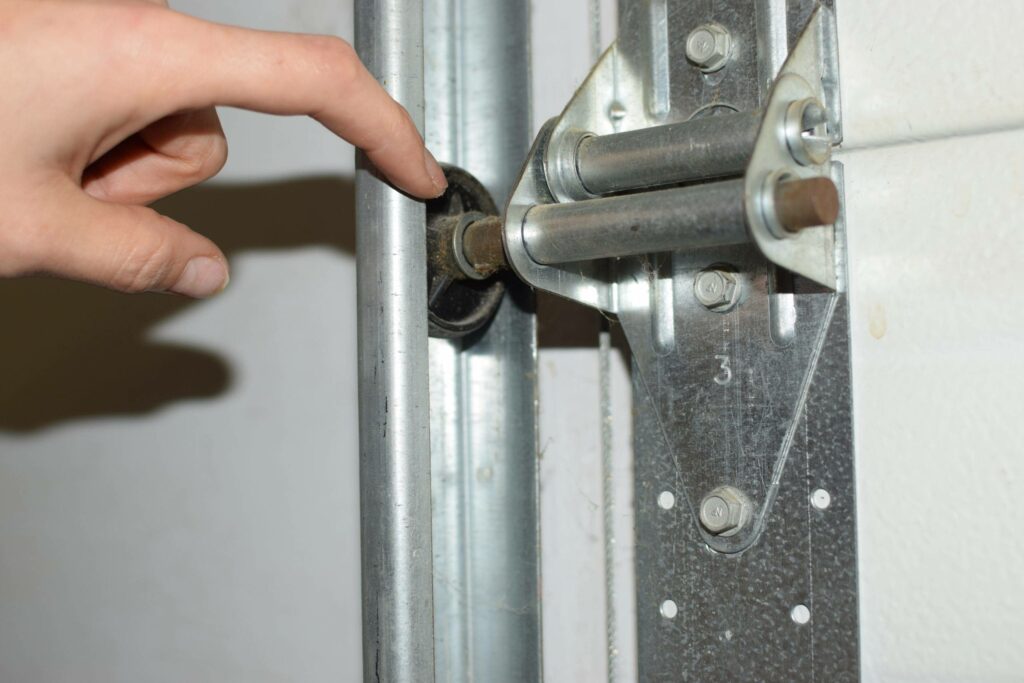
A close inspection of the rollers on both sides of the door reveals damage that explains why the door has stopped moving as it should.
Look for these signs of visible roller damage:
- Cracked or chipped nylon means the wheel can no longer hold its shape.
- Flat spots indicate that the roller is dragging rather than rolling.
- Rust on steel rollers disrupts smooth contact with the track.
- Worn or missing ball bearings mean internal support has failed.
- Wobbling between the wheel and stem signals complete internal failure.
Roller damage at this level warrants a professional garage door repair visit to assess the extent of deterioration throughout the system.
The Door Moves Crooked or Unevenly
Uneven movement across both sides of the door is a direct sign that one or more rollers have failed and can no longer support the panel equally.
Watch for these movement patterns:
- One side of the door sits lower than the other during travel or at rest.
- Both sides move at different speeds, with one side lagging noticeably behind.
- Visible tilting of the panel while the door is in motion.
- Skipping or jumping along the track instead of gliding in a straight, even line.
- Uneven closure that leaves a gap along one side at the bottom of the door.
Uneven panel movement left unaddressed places direct stress on the door structure and can necessitate a garage door replacement.
Excessive Vibration and Shaking
A vibration that travels through the door frame during operation means rollers have lost the bearing integrity needed to move the panel without resistance.
Notice these vibration patterns during each cycle:
- Shuddering on the way up points to rollers dragging along the track.
- Vibration transferring into the door frame indicates advanced roller wear.
- Louder opener operation signals compensation for increased roller resistance.
- Shaking intensifies near the top or bottom of the travel range.
- Progressive worsening confirms bearing degradation is ongoing.
A vibration that worsens over time is a strong signal that replacing garage door rollers can no longer be postponed.
Frequent Sticking or Jerky Movements
A door that no longer travels in one fluid motion has rollers binding on the track, forcing the opener to operate outside its normal operating range.
Watch for these movement issues:
- Pausing midway indicates that the rollers are catching on the track surface.
- Multiple attempts to open signal significant roller resistance.
- Choppy travel points to inconsistent roller contact along the track.
- An unexpected reversal occurs when the opener detects abnormal resistance.
- Hesitation at the start of each cycle means rollers are no longer releasing freely.
A door that binds, reverses, or stalls mid-cycle is experiencing an urgent mechanical failure that requires emergency garage door repair.
Why Garage Door Roller Problems Should Never Be Ignored
Worn rollers do not fail in isolation, and with each cycle the door completes with damaged rollers, the surrounding components move closer to failure.
Here is why roller problems should never be ignored:
- Worn rollers shift excess load onto the garage door hinges and bottom bracket.
- The garage door opener strains harder against roller resistance with every cycle.
- Damaged rollers create uneven tension on torsion springs and cables.
- Grinding rollers wear down the track surface over time.
- Failed rollers can cause the door to derail, leading to property damage and risk of injury.
To learn how frequently garage door rollers replacement should be scheduled, read our guide on How Often Should Garage Door Rollers Be Replaced?, which covers the replacement timeline every homeowner should follow.
What to Do After Spotting Garage Door Roller Damage
Roller damage that is caught early gives a technician the best chance to address the problem before it spreads to the tracks, springs, and opener.
Here is what to do after spotting garage door roller damage:
- Stop using the door until a professional inspection is completed.
- Check all visible rollers for cracks, flat spots, rust, and wobbling.
- Note when the symptoms first appeared to help the technician assess the progression of damage.
- Check the garage door hinges and bottom bracket for signs of wear.
- Contact a local garage door professional in Gainesville, FL, for a full system inspection.
Taking action at the first sign of roller damage helps keep a manageable repair from becoming a larger garage door service job.
What to Expect When a Pro Handles Garage Door Roller Replacement
Professional garage door roller replacement goes beyond swapping out old parts, covering a full assessment of every component that the worn rollers may have affected.
Here is what to expect when a pro handles garage door roller replacement:
- All rollers inspected, from the top roller down to the bottom roller.
- Tracks assessed for bending, warping, or surface damage.
- Torsion springs and cables checked for wear linked to roller resistance.
- Roller type selected based on door weight, usage, and durability needs.
- New roller installation verified for proper alignment and smooth operation.
To find out whether garage door roller replacement is a job worth tackling alone or better left to a professional, read our guide on Should You DIY or Hire a Pro for Garage Door Roller Replacement?, which covers what the decision really involves.
How to Prevent Garage Door Roller Wear From Happening Too Soon
Consistent upkeep is the most effective way to extend roller life and reduce the frequency of garage door rollers replacement over time.
Here is how to prevent garage door roller wear from happening too soon:
- Apply garage door lubricant to roller stems and bearings every six months.
- Wipe down both tracks regularly to remove dirt and debris buildup.
- Inspect all rollers visually for cracks, rust, and wobbling at least twice a year.
- Keep the area around both tracks clear of objects that could interfere with roller movement.
- Schedule annual garage door maintenance with a local professional in Gainesville, FL.
Small maintenance habits done regularly are what keep rollers in good shape and the door out of the repair queue.
Spot the Signs Early and Get Garage Door Roller Replacement Done Right
Garage door rollers that show visible damage, make unusual noises, or cause uneven movement tell a clear story: the system needs attention. Waiting on these signs allows the wear to spread beyond the rollers and pull the tracks, springs, hinges, and opener into the repair.
Alachua Door Company serves homeowners across Gainesville, FL, with the tools, training, and hands-on experience needed to properly replace garage door rollers. Contact us or give us a call today, and let our team evaluate every roller on your door before the wear progresses any further.
Frequently Asked Questions
How do I know if a cable repair also requires replacing other components?
A professional technician will inspect the drums, pulleys, and bottom brackets during any cable repair visit. If any of these components show wear or damage, replacing them alongside the cable prevents repeat failures.
What is the difference between torsion spring cables and extension spring cables?
Torsion cables run horizontally along the top of the door and work with torsion springs to lift the door. Extension spring cables run along the sides and work with extension springs, making each type specific to the spring system installed on the door.
How do garage door companies determine their cable repair pricing?
Most garage door companies base their pricing on the type of cable, the spring system involved, the extent of the damage, and the cost of labor in the local market. Requesting a written estimate before work begins gives homeowners a clear picture of what they will pay.
Is it possible to prevent garage door cable failure altogether?
No cable lasts forever, but scheduling regular preventative maintenance significantly extends its lifespan. A technician can catch early fraying, misalignment, and tension issues before they develop into a full cable failure.
What should I do immediately after noticing a broken cable?
Stop using the garage door completely and avoid attempting to open or close it manually. Continued operation with a broken cable puts extreme stress on the remaining components and increases the risk of a more involved repair.
How does a garage door technician test the system after a cable repair?
A technician performs a balance test by stopping the door at the halfway point and releasing it to confirm it holds position. The auto-reverse function and opener response are also tested to ensure the entire system operates correctly after the repair.
Can new cables be installed on an old garage door system?
Yes. New cables can be installed on an older system as long as the drums, springs, and other hardware are still in good condition. A technician will assess the system’s overall condition before recommending new cables or a broader repair.
What makes DIY cable repair riskier than other garage door repairs?
Garage door cables work directly with springs that store extreme tension, making any mistake during the repair immediately dangerous. Unlike other garage door parts, cables cannot be safely adjusted without the right tools and a full understanding of how the spring system works.
How often should garage door cables be inspected by a professional?
Most garage door services recommend a professional inspection at least once a year. Homes in humid climates or those with high daily usage may benefit from more frequent checkups to catch rust, fraying, or tension issues early.