

When a garage door refuses to close manually, it is a clear sign that something inside the garage door system has failed, and the problem needs to be identified before anything else. Figuring out why the door will not respond during manual operation starts with knowing what each part of the system is supposed to do.
Scheduling a garage door repair is sometimes the only option when the cause goes beyond what a visual inspection can reveal. This guide covers the most common reasons why a garage door won’t close manually, the warning signs to look for, and when calling a professional is the most practical decision.
Can Your Garage Door Still Encounter Problems Even in Manual Mode?
Switching to manual mode does not mean the door is free of problems, because the mechanical components that control its movement are still fully involved in every operation.
Yes, a garage door can still encounter problems in manual mode because:
- Spring tension, cable condition, and roller alignment all affect how the door moves by hand.
- Physical damage to panels or tracks does not disappear when the opener is disconnected.
- A door that was already struggling in automatic mode will behave the same way or worse manually.
- Improper use of the emergency release cord can leave the door in an unstable position.
- Humidity, debris, and wear affect the door regardless of whether it is powered.
To understand how these factors affect your ability to operate the door by hand, read our full guide on How to Close a Garage Door Manually, which walks through the correct manual release process step by step.
Warning Signs Your Garage Door Has a Manual Operation Problem
A garage door in manual mode will show clear physical signs when something inside the system is wrong.
Warning signs that indicate a manual operation problem include:
- Lifting or lowering the door by hand requires excessive force and feels unnatural.
- Grinding, scraping, or popping sounds occur during movement along the track.
- One side of the door sits lower than the other when closed.
- Movement stops abruptly at certain points without any visible obstruction blocking the path.
- Releasing the door causes it to drop quickly rather than stay in place.
Doors showing any of these signs have an underlying mechanical issue that manual operation alone will not resolve.
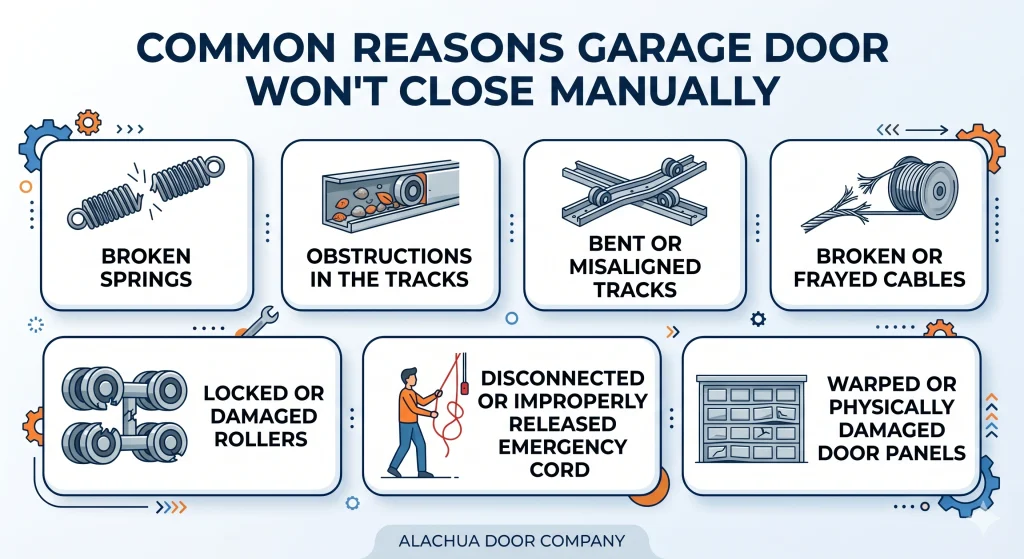
Common Reasons Why Your Garage Door Won’t Close Manually
Broken Springs
Torsion springs carry the door’s full weight, and a broken spring makes manual operation nearly impossible.
Signs that point to a broken spring include:
- A loud bang from the garage often signals the moment a spring snaps.
- Lifting the door by hand feels extremely heavy or completely impossible.
- Visible gaps or separations appear along the spring coil.
- Cables on one or both sides appear loose or mispositioned.
- Door movement is uneven, with one side rising higher than the other.
Broken springs are among the most demanding repairs in any garage door system, and a professional trained in garage door spring repair should always be the first call when this component fails.
Obstructions in the Tracks
Small debris inside the tracks can stop the rollers from completing a full travel cycle during manual operation.
Common obstructions that affect track performance include:
- Dirt and grime packed into the channel significantly slow the roller’s movement.
- Pebbles or hardened debris in the lower track block the roller path.
- Leaves and organic material build up inside the track over time.
- Paint drips or adhesive residue creates uneven surfaces inside the track.
- Minor impacts leave bent track edges that pinch and restrict roller travel.
Clearing visible debris is a reasonable first step, but any track damage found during inspection requires a professional assessment before operating the door again.
Bent or Misaligned Tracks
Warped or shifted tracks force the rollers out of their intended path, making it impossible to manually lower the garage door without resistance.
Indicators of a bent or misaligned track include:
- Visible bends or kinks appear along the vertical or horizontal sections.
- The gap between the roller and the track wall is wider than normal on one side.
- Movement along one section feels rough or produces scraping sounds.
- Mounting brackets appear loose or pulled away from the wall.
- Door travel becomes smooth again once it passes a specific point.
Track misalignment accelerates wear on the rollers, cables, and surrounding hardware with every use and will not correct itself over time.
Broken or Frayed Cables
Lift cables distribute the door’s weight evenly alongside the springs, and a snapped cable makes it dangerous to shut the garage door manually.
Warning signs of cable failure include:
- Fraying or unraveling strands appear near the drum.
- One side of the door hangs lower than the other during operation.
- Loose or slack cable coils are visible around the bottom bracket.
- Rust or corrosion has developed along the cable strands.
- Door movement feels jerky or lopsided during manual lowering.
Cables operate under significant tension at all times, and anyone dealing with snapped or worn strands should leave garage door cable replacement entirely to a trained technician.
Locked or Damaged Rollers
Worn or broken rollers make emergency garage door manual close attempts rough, uneven, and physically demanding on every cycle.
Signs that rollers need immediate attention include:
- Wobbling or rattling sounds occur as the door travels the track.
- Flat spots or cracks are visible on the roller wheel surface.
- Rust on the roller stem causes it to seize inside the bracket.
- Excessive resistance appears at the same spot during every operation.
- Rollers have visibly separated from the track during a recent attempt.
Worn rollers place unnecessary strain on the springs, cables, and tracks, and can affect the entire door system over time.
Disconnected or Improperly Released Emergency Cord
Pulling the red emergency release cord incorrectly can leave the trolley system partially engaged, making manual operation unpredictable.
Problems caused by improper cord release include:
- Partial disconnection leaves the door half-engaged with the opener carriage.
- Pulling the cord during mid-travel causes the door to drop suddenly.
- Re-engaging the trolley fails because the cord was not reset properly.
- Carriage drag makes door movement feel inconsistent during manual use.
- Repeated incorrect use damages the manual release mechanism over time.
Proper cord technique is critical for garage door manual operation, and getting it wrong consistently shortens the life of the full opener assembly.
Warped or Physically Damaged Door Panels
Panel damage disrupts the structural alignment of the entire door and can prevent it from reaching the fully closed position manually.
Ways panel damage affects manual operation include:
- Warped panels press against the door frame, creating friction during travel.
- Bent sections catch on the track or hardware at specific points.
- Gaps between panels allow outside air and debris to enter the garage.
- Structural imbalance puts an uneven load on the cables and springs.
- Minor surface damage often conceals deeper frame misalignment underneath.
Panel damage that affects door movement should always be evaluated by a professional technician, as poorly executed garage door panel repair shifts stress to the cables, springs, and surrounding hardware.
What to Do When You Spot These Problems
Knowing what to check before calling a professional can help you describe the problem accurately and avoid making the situation worse.
Practical steps to take when you spot a manual operation problem include:
- Check the full length of both tracks for visible debris, bends, or gaps.
- Lift the door slowly by hand from the center to test whether it feels balanced.
- Listen for sounds during movement to identify where the resistance is coming from.
- Look at the cables and springs for any visible fraying, rust, or separation.
- Stop all manual operation immediately if the door feels unstable or drops unexpectedly, and call a professional technician right away.
To get the door into a stable position before any of these checks, read our guide on How to Put a Garage Door in Manual Mode, which walks through the correct disengagement process from start to finish.
How Professionals Handle Manual Garage Door Problems
A trained technician approaches every manual garage door problem with a full system inspection before beginning any repair work.
What a professional technician does when handling manual garage door problems includes:
- Inspecting the springs, cables, rollers, and tracks for wear, damage, or misalignment.
- Testing the door balance by hand to determine whether the counterbalance system is still functional.
- Checking the emergency release cord and trolley system for proper disengagement and reconnection.
- Using specialized tools to adjust track alignment, replace worn components, and restore smooth operation.
- Confirming the door reaches the fully closed position correctly before completing the service call.
To explore what manual operation looks like when power is completely lost, read our guide on Can I Close My Garage Door With No Power?, which covers everything homeowners need to know about closing the door during an outage.
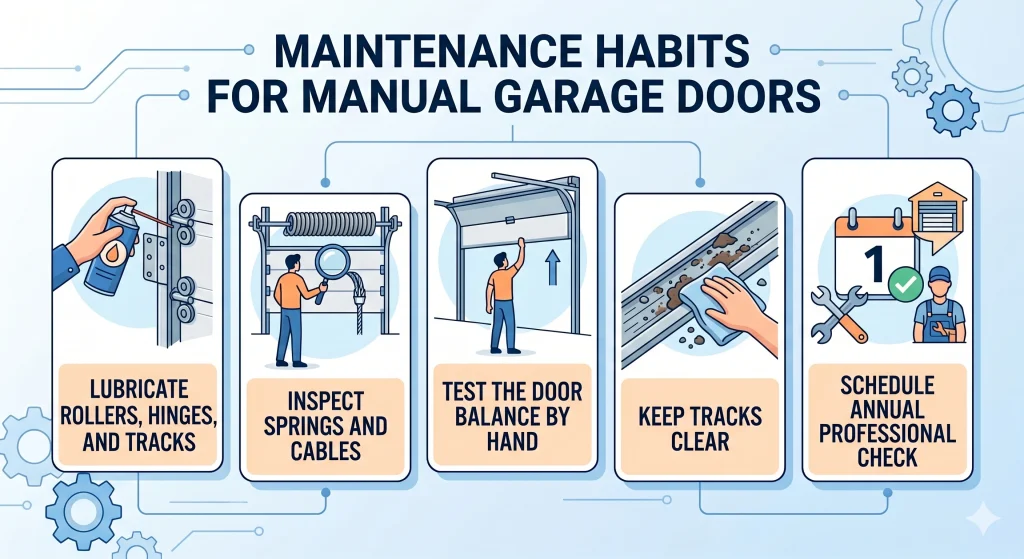
How to Keep Your Garage Door Working Properly in Manual Mode
Regular maintenance is what keeps a garage door functioning properly in both automatic and manual modes throughout the year.
Key maintenance habits that preserve manual operation include:
- Properly lubricate the rollers, hinges, and tracks every few months to reduce friction and wear.
- Inspect the springs and cables regularly for visible rust, fraying, or signs of wear.
- Test the door balance by hand periodically to confirm the counterbalance system is holding.
- Keep the tracks clear of dirt, debris, and buildup that can restrict roller movement.
- Schedule a professional garage door maintenance check at least once a year.
Homeowners who stay consistent with these habits experience fewer unexpected failures and extend the overall lifespan of their garage door system.
Address a Garage Door That Won’t Close Manually by Identifying the Cause and Letting a Pro Fix It
Understanding why a garage door refuses to close manually is the foundation of every effective repair, and acting on the warning signs early is what prevents a minor issue from becoming a costly replacement. Identifying the cause correctly the first time is what keeps the entire garage door system running the way it should.
Alachua Door Company proudly serves homeowners across Gainesville, FL with professional garage door repair, maintenance, and installation services. Contact us or give us a call today so our licensed technicians can diagnose exactly why your garage door won’t close manually and get it working properly again.
Frequently Asked Questions
How do I know if my garage door is safe to operate manually?
Perform a quick balance test by lifting the door halfway and releasing it to see if it stays in place. If it drops or shoots upward, how to manually close a garage door safely requires a professional inspection before any further attempts.
Why does my garage door feel so heavy when I try to move it by hand?
Heavy door movement during manual garage door closing almost always points to a broken or worn torsion spring that is no longer carrying the door's counterbalance weight. A professional garage door technician should inspect the spring system before operating the door again.
Can debris in the tracks prevent my garage door from closing manually?
Yes, even small obstructions like dirt, pebbles, or hardened debris can stop the rollers from completing a full travel cycle when you close garage door without power or automatic assistance. Checking the bottom of the door and the full track length for visible buildup is a good idea before attempting manual operation.
What should I do if the garage door stops halfway through its closing cycle manually?
Stop moving the door immediately and inspect the tracks and rollers for visible obstructions or damage. Forcing the door through a resistance point when you know how to shut garage door manually is what causes minor issues to escalate into full component failures.
Is it possible to operate the door manually if the opener is completely broken?
Yes, operating the door manually is possible as long as the springs, cables, and tracks are in good working condition and the emergency release cord has been properly disengaged. If any of these components are damaged, manually lower garage door should not be attempted without professional guidance.
Why won't my garage door close automatically even after I re-engage the opener?
A garage door won't close automatically after manual use if the trolley was not properly reconnected to the automatic door opener carriage during re-engagement. A technician can inspect the connection point and confirm that the electric garage door opener is fully operational again.
Can roller damage alone stop a garage door from closing manually?
Yes, severely damaged or seized rollers create enough resistance to make manual operation physically impossible without risking further damage to the tracks and hardware. Understanding how to close garage door manually with worn moving parts is what helps homeowners recognize when roller replacement is the only viable option.
How often should a garage door be professionally inspected to avoid manual operation failures?
A professional inspection at least once a year gives homeowners peace of mind and is the most effective way to catch worn components before they cause a complete failure of manual or automatic operation. Scheduling consistent garage door maintenance is what keeps both the opener and the manual release system functioning reliably year-round.
What happens if I ignore a garage door that won't close manually?
Continuing to operate a door with an underlying issue accelerates wear on the springs, cables, rollers, and tracks throughout the system. Addressing the problem early is what prevents a minor repair from turning into a full garage door replacement.


