
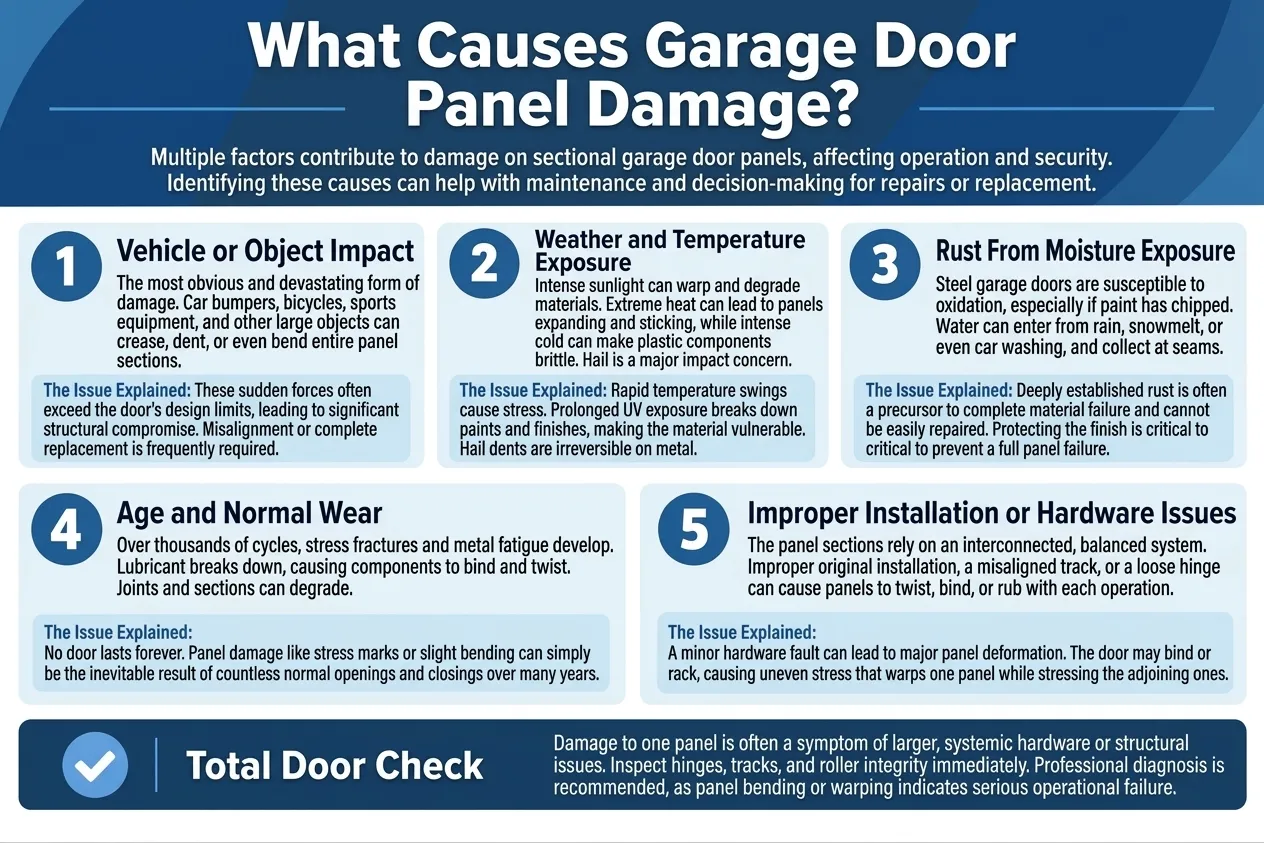
Vehicle impact, weather exposure, rust, age, and improper installation all rank among the leading causes of garage door panel damage across most residential homes today. A single impact can damage a panel instantly, while rust or age typically takes months or years to show clear signs.
Identifying the cause of a damaged panel determines whether a garage door panel replacement or a smaller repair best fits the situation going forward. This guide covers each specific cause in detail, along with what it typically means for the door’s long-term condition and structural integrity.
Key Takeaways
- Vehicle impact ranks among the most common causes of sudden panel damage
- Extreme heat or cold can warp or crack panel material over time
- Rust develops fastest in areas with consistent moisture exposure
- Age gradually weakens panels even without a single dramatic incident
- Improper installation often leads to premature wear on individual panels
Common Causes of Garage Door Panel Damage
A garage door panel typically shows damage from one of several distinct, identifiable causes rather than a single universal reason.
| Cause | How It Damages the Panel | Prevention Tip |
| Vehicle or object impact | Creates dents, cracks, or bent metal | Mark clearance zones and drive carefully |
| Weather and temperature swings | Causes warping, fading, or cracking | Apply weatherproof coatings when available |
| Moisture exposure | Leads to rust on steel panels | Keep the area dry and ventilated |
| Age and normal wear | Gradually weakens panel material | Schedule routine inspections over time |
| Improper installation | Creates stress points and misalignment | Confirm professional installation standards |
Identifying which cause applies to a specific panel narrows down whether repair or replacement offers the better long-term fix.
Vehicle or Object Impact
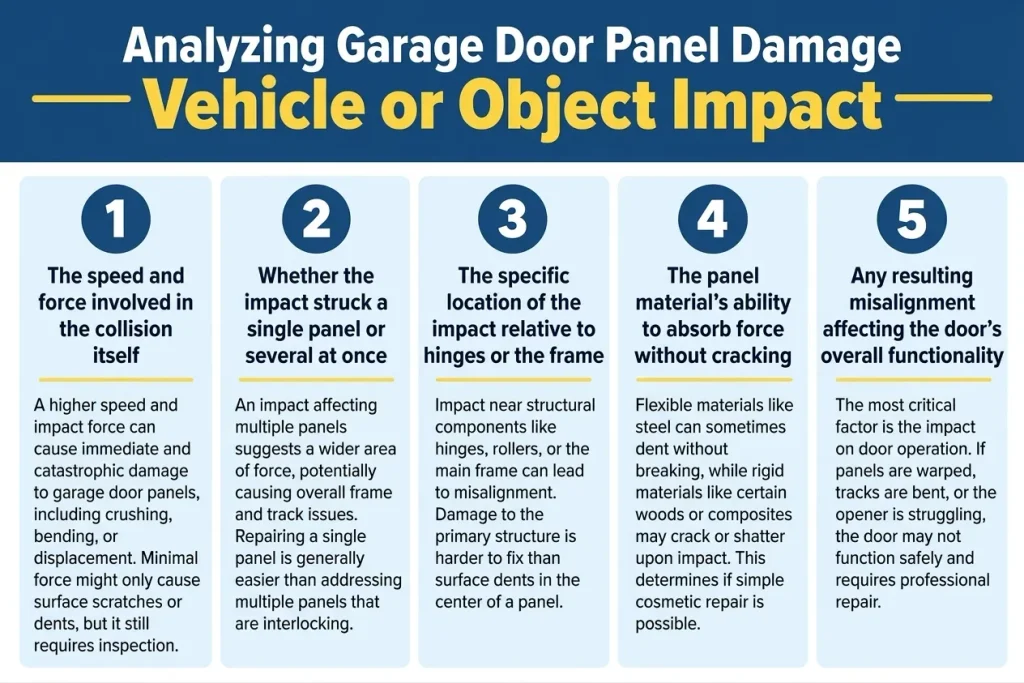
Direct impact from a vehicle backing into the door or an object striking the panel often causes the most sudden, visible surface damage.
A few specific factors shape how severe the resulting damage becomes:
- The speed and force involved in the collision itself
- Whether the impact struck a single panel or several at once
- The specific location of the impact relative to hinges or the frame
- The panel material’s ability to absorb force without cracking
- Any resulting misalignment affecting the door’s overall functionality
Damage contained to one section typically only needs a garage door repair, as long as the surrounding structure stays unaffected.
Weather and Temperature Exposure
Extreme heat, cold, and repeated temperature swings gradually stress panel material in ways that often go unnoticed until visible warping appears.
This kind of wear tends to appear through a few distinct patterns, including:
- Direct sun exposure heating one side of the door unevenly
- Rapid temperature drops causing material to contract quickly
- Humidity swelling certain panel materials over repeated cycles
- UV exposure fading paint and weakening the surface layer
- Repeated freeze-thaw cycles stressing seams and joints
To find out how a technician sources a panel that accounts for long-term weather exposure, read our guide on How to Match a Replacement Panel to an Existing Door, which covers what affects a proper match.
Rust From Moisture Exposure
Rust forms when moisture reaches unprotected steel panels, and the damage often spreads well beyond what appears on the surface.
Tracing the source of moisture usually points to one of the following:
- Standing water pooling near the bottom panel of the door
- Poor drainage directing runoff toward the panel surface
- Condensation building up in humid, poorly ventilated garages
- Scratches or chips exposing bare metal to the elements
- Salt exposure in coastal areas accelerating the rusting process
To learn exactly what rust looks like once it reaches a stage worth acting on before it spreads further, read our guide on Signs a Garage Door Panel Needs Replacing, which walks through every visible warning sign a homeowner should watch for.
Age and Normal Wear
Every garage door panel has a practical lifespan, and age alone eventually causes wear even without a single dramatic incident.
A panel’s age tends to reveal itself through the following changes:
- Gradual fading or dulling of the original paint finish
- Minor warping accumulating slowly across many years on older doors
- Weakened seams where adjacent panels connect to one another
- Hardware wearing out at roughly the same pace as the panel
- Reduced structural strength compared to when the door was new
To confirm whether an aging panel still qualifies for replacement on its own without affecting the rest of the door, read our guide on Can Garage Door Panels Be Replaced?, which breaks down the full decision process from start to finish.
Improper Installation or Hardware Issues
A panel installed incorrectly from the start often develops problems well before normal wear would otherwise cause them.
Poor installation work often leaves behind clues such as:
- Panels forced into place without proper alignment
- Hardware tightened unevenly, creating uneven stress points
- Incorrect panel sizing for the specific door type
- Missing or damaged weatherstripping during the original setup
- Overlooked safety checks during the initial installation process
A panel inspection paired with a garage door opener repair often uncovers whether the opener contributed to the underlying stress.
Preventing Panel Damage Before It Starts
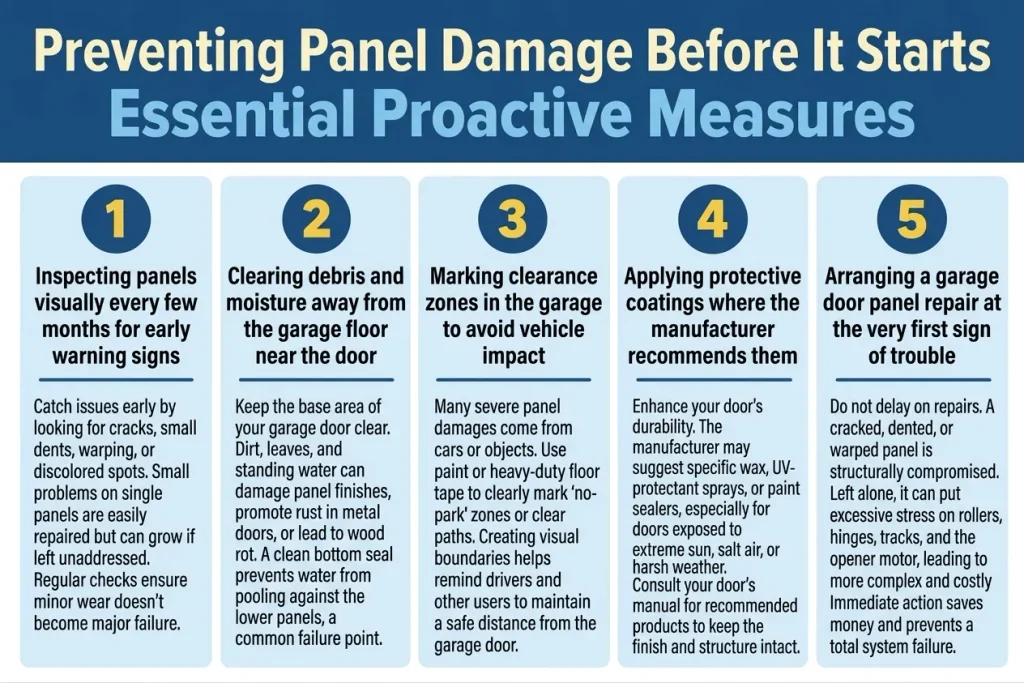
Preventing panel damage takes far less effort than addressing it after the fact, and most prevention steps fit easily into routine upkeep.
A consistent prevention routine typically includes:
- Inspecting panels visually every few months for early warning signs
- Clearing debris and moisture away from the garage floor near the door
- Marking clearance zones in the garage to avoid vehicle impact
- Applying protective coatings where the manufacturer recommends them
- Arranging a garage door panel repair at the very first sign of trouble
Consistent attention like this keeps most panels in good condition for years longer than waiting to react after damage appears.
Understanding the Cause Leads to the Right Fix
Identifying the specific cause behind a damaged panel makes the decision between repair and replacement far more straightforward for everyone involved. A panel damaged by a single impact often responds differently to treatment than one weakened gradually by age or moisture over the long run.
Alachua Door Company diagnoses the exact cause behind every damaged panel reported across Gainesville before recommending the right next steps. Contact us or give us a call today, and let an experienced technician confirm exactly what actually caused the damage.
Frequently Asked Questions
Can extreme weather alone damage a garage door panel?
Extreme heat, cold, and humidity can warp, fade, or crack panel material even without any direct physical impact. Repeated temperature swings over several years often cause more damage than a single weather event.
Why does rust develop on some garage door panels but not others?
Rust develops fastest on steel panels exposed to standing water, poor drainage, or regular coastal salt air. Panels kept dry and well-ventilated typically show far less rust damage over the same period.
Does the age of a garage door panel always mean it needs replacing?
Age alone does not automatically require full replacement, since a well-maintained older panel can still function properly for years. A professional inspection helps confirm whether an aging panel still meets safety and structural standards.
How can improper installation cause damage that shows up later?
Panels forced into place without proper alignment often create stress points that worsen gradually rather than failing immediately. This delayed damage can make the original installation difficult to identify as the root cause.
Is impact damage always visible right away?
A hard impact usually causes an obvious dent or crack, but a minor impact can create hidden stress that surfaces weeks later. Requesting an inspection soon after any noticeable collision counts as the first step toward catching hidden damage early.
Can a homeowner prevent rust from forming on garage door panels?
Keeping the base of the door dry, improving drainage, and addressing scratches quickly all help prevent rust from taking hold. Coastal homeowners may need more frequent inspections due to increased salt exposure in the air.
What role does the garage door opener play in panel damage?
An automatic opener pulling unevenly can place extra stress on specific panels, especially near hardware connection points. Addressing opener issues alongside panel damage often prevents the same stress from recurring.
How often should garage door panels be inspected for damage?
Inspecting panels every few months catches most early warning signs before they cause more serious structural problems. Homes in areas with extreme weather or coastal air may benefit from more frequent checks.
Does one type of panel damage increase the risk of other types developing?
Existing damage, such as a dent or rust spot, often creates a weak point where additional damage forms more easily on surrounding panels over time. Addressing the original cause quickly helps prevent this kind of compounding damage.


