
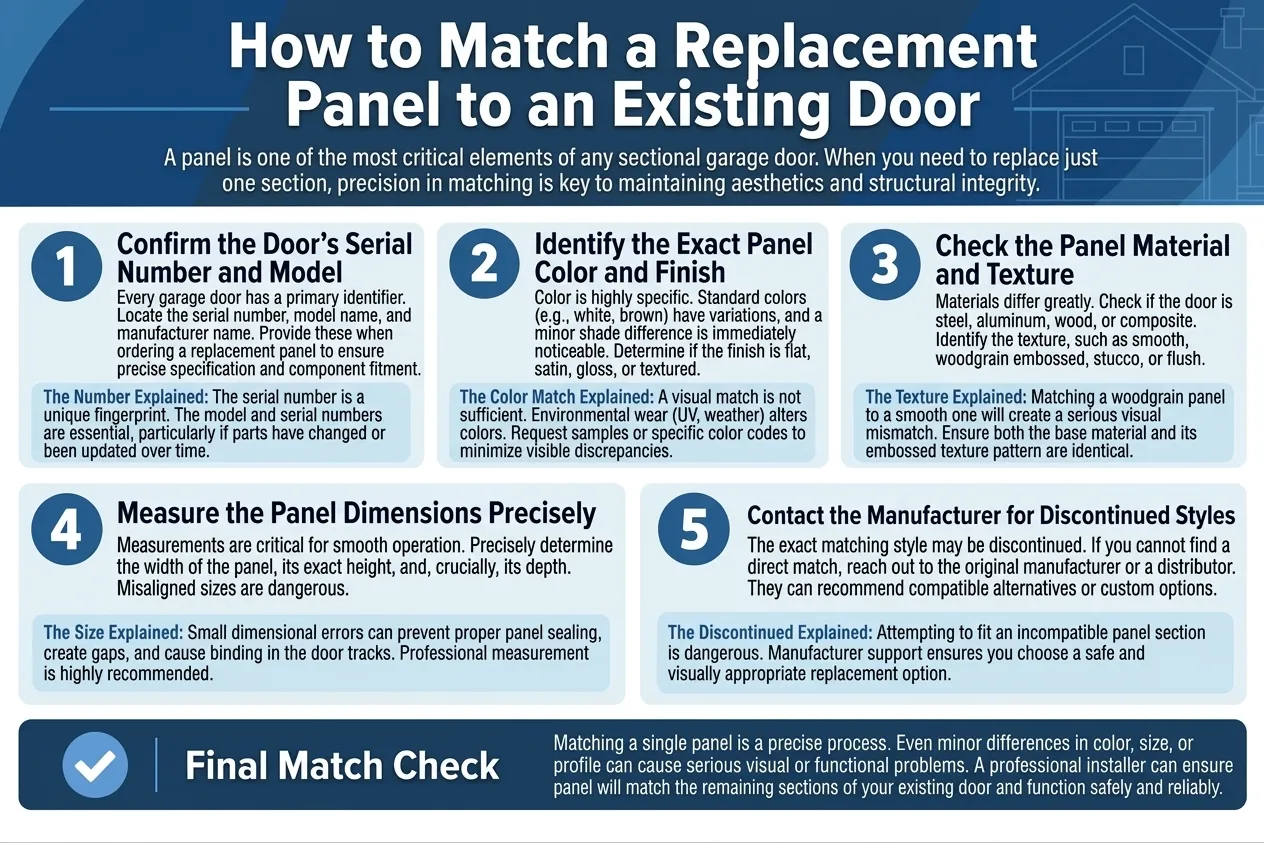
Matching a replacement panel to an existing door starts with confirming the exact model, color, and material before ordering. A professional garage door panel replacement service checks these details in advance, which prevents a mismatch from standing out against the rest of the door.
A close but imperfect match often draws more attention than the original damage ever did, especially once direct afternoon sunlight highlights the visible difference. This guide covers the steps to achieve a proper match, along with what to do when an original panel is no longer available.
Key Takeaways
- The serial number identifies the exact model needed for a proper match
- Color fading over time often requires blending rather than a single swap
- Panel material affects both appearance and long-term durability
- Precise measurements prevent gaps or misalignment after installation
- Manufacturers sometimes offer close alternatives for discontinued styles
Steps to Match a Replacement Panel to an Existing Door
Finding the right replacement panel depends on gathering specific details before placing any order with a supplier or manufacturer.
| Matching Factor | What to Check | Where to Find It |
| Serial number | The exact model and production batch | Sticker on the door frame or panel edge |
| Color and finish | Current shade compared to a new sample | A swatch from the manufacturer or dealer |
| Material | Steel, wood, or composite construction | Manufacturer specifications or the panel itself |
| Dimensions | Height, width, and panel section number | Measured directly from the damaged panel |
| Availability | Whether the style is still in production | Manufacturer’s current catalog or a dealer |
A replacement panel ordered without this groundwork often arrives close, but not close enough, to blend in properly once installed.
Confirm the Door’s Serial Number and Model
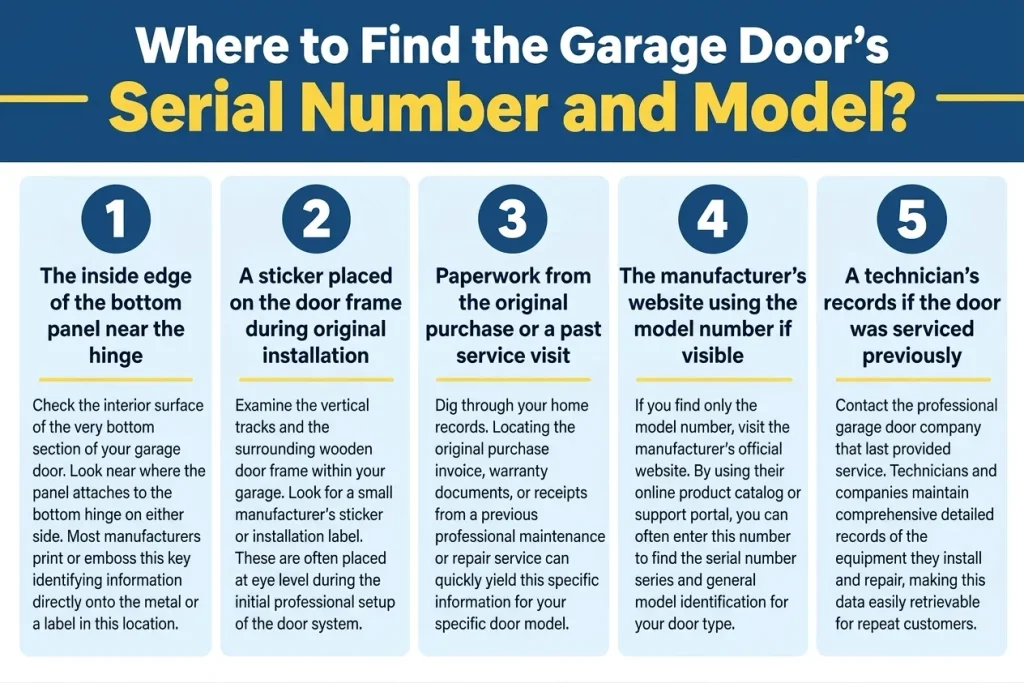
The serial number printed on the door frame or an individual panel identifies the exact model needed for an accurate order.
Locating this information usually involves checking:
- The inside edge of the bottom panel near the hinge
- A sticker placed on the door frame during original installation
- Paperwork from the original purchase or a past service visit
- The manufacturer’s website using the model number if visible
- A technician’s records if the door was serviced previously
To confirm whether a panel this specific still qualifies as a simple swap rather than a larger project, read our guide on Can Garage Door Panels Be Replaced?, which walks through the full decision process.
Identify the Exact Panel Color and Finish
Color matching becomes more difficult the longer a door has been exposed to sun, weather, and general wear over the years.
Getting the color right typically requires:
- Comparing a physical swatch against the door in natural daylight
- Accounting for fading that has occurred unevenly across the surface
- Checking whether the finish is painted, powder-coated, or anodized
- Requesting a custom color match when a stock option falls short
- Testing a small sample area before committing to a full order
Ordering through a garage door replacement specialist often provides access to color-matching options unavailable through general suppliers.
Check the Panel Material and Texture
Panel material affects far more than appearance, since steel, wood, and composite panels each respond differently to weather and daily use.
Confirming the right material involves checking:
- Whether the existing door uses steel, wood, or composite panels
- The specific texture, such as smooth, embossed, or wood grain
- Insulation type and thickness if the door is energy efficient
- Panel thickness compared to the manufacturer’s original specification
- Compatibility between the new panel and existing hardware
To find out what typically causes the wear that leads to a mismatch in the first place, read our guide on What Causes Garage Door Panel Damage?, which breaks down every common cause in detail.
Measure the Panel Dimensions Precisely
Accurate measurements prevent a replacement panel from creating gaps, overlaps, or misalignment once installed.
Taking precise measurements typically covers:
- Panel height and width down to the nearest fraction of an inch
- The specific section number if the door uses multiple panel rows
- Track width to confirm the replacement fits the existing hardware
- Panel thickness to match the insulation and structural profile
- Overall door dimensions if more than one panel needs replacing
Double-checking every measurement before placing an order prevents costly delays while you wait for a second shipment.
Contact the Manufacturer for Discontinued Styles
Older doors sometimes use panel styles the original manufacturer no longer produces, making an exact match harder to find.
Working around a discontinued style usually involves:
- Contacting the manufacturer directly for archived inventory
- Searching salvage or specialty suppliers for the specific model
- Requesting a close alternative in similar color and texture
- Considering a full garage door panel repair to blend the new section in
- Consulting a professional familiar with older, discontinued models
To determine how a professional weighs an aging panel’s condition when an exact style is no longer made, read our guide on Signs a Garage Door Panel Needs Replacing, which covers how aging affects the search for a proper match.
What to Do When an Exact Match Is Not Available
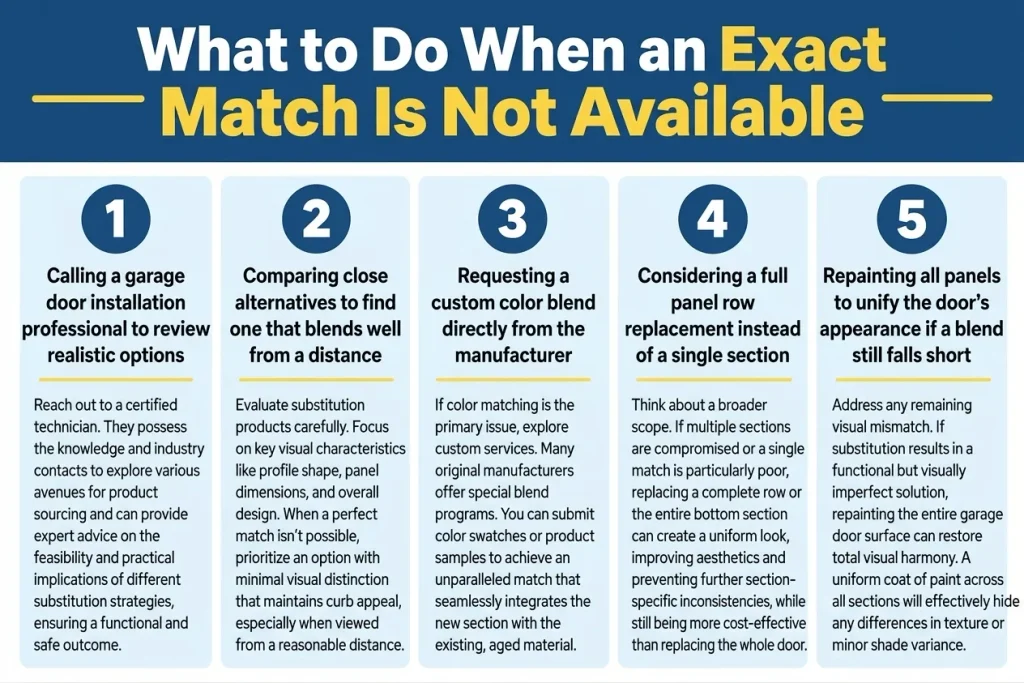
Sometimes even a thorough search turns up no truly identical panel, which calls for a different approach to keep the rest of the door looking consistent.
Consider the following options when a perfect match cannot be found:
- Calling a garage door installation professional to review realistic options
- Comparing close alternatives to find one that blends well from a distance
- Requesting a custom color blend directly from the manufacturer
- Considering a full panel row replacement instead of a single section
- Repainting all panels to unify the door’s appearance if a blend still falls short
Accepting a close alternative instead of an exact match still restores good condition and full function while keeping the door’s overall look consistent.
A Proper Match Protects the Door’s Appearance and Value
Taking the time to confirm the exact model, color, and material before ordering a replacement panel prevents a mismatch that stands out for years to come. A well-matched panel restores function and curb appeal without drawing unnecessary attention to the repaired section.
Alachua Door Company sources replacement panels for homeowners across Gainesville with the same careful attention to detail on every single match. Contact us or give us a call today, and let an experienced technician confirm the right panel for the door before we place any order.
Frequently Asked Questions
Where can a homeowner find a door’s serial number?
The serial number is typically found on a sticker placed on the door frame or along the edge of a bottom panel. Original purchase paperwork or past service records may also list this information.
Why does panel color fade unevenly over time?
Sun exposure affects different sections of a door at different rates, depending on direction and how much shade the area receives. This uneven fading makes it harder to match a new panel to the existing color.
Can a replacement panel come in a different material than the original?
Mixing materials is possible but generally not recommended, since steel panels and wood respond differently to weather and daily wear. Matching the original material keeps performance and appearance consistent across the entire door.
What happens if the exact panel style is no longer manufactured?
A professional can search salvage suppliers, request a close alternative, or recommend a full garage door replacement for better consistency. Some manufacturers also keep archived inventory available for older, discontinued styles.
How precise do panel measurements need to be?
Measurements should be accurate down to a fraction of an inch to prevent gaps, overlaps, or installation problems later. Even small measurement errors can affect the garage door’s functionality after installation.
Does an older door make finding a matching panel more difficult?
Older doors are more likely to use discontinued styles or colors, which can extend the search for a proper match. A professional familiar with older models often knows where to find hard-to-locate options.
Can a homeowner repaint a replacement panel to improve the match?
Repainting is an option, though matching the exact original shade without professional installation equipment can be difficult. Some homeowners choose to repaint all panels for a fully uniform appearance instead.
Is it worth replacing more than one panel for a better match?
Replacing an entire panel row sometimes provides a more consistent appearance than trying to match a single aging panel exactly. This approach works especially well when fading has affected the surrounding panels as well.
How long does the matching and ordering process typically take?
Matching and ordering a replacement panel typically takes anywhere from a few days to several weeks, depending on availability. Discontinued styles or custom color requests generally extend this timeline further.


