A garage door is one of the most frequently used entry points in many homes, yet its mechanical parts often go unnoticed until a problem appears. When regular inspections and proper garage door maintenance are skipped, small mechanical changes can slowly develop within the system.
Over time, neglected components such as springs, rollers, and tracks may wear, affecting the door’s performance and safety. In many cases, problems that start as minor maintenance issues can eventually lead homeowners to seek emergency garage door repair when the system stops operating properly.
Can Ignoring a Garage Door Maintenance Checklist Lead to Bigger Problems?
A garage door system may continue to operate even as internal wear develops, and skipping routine servicing can gradually place additional strain on springs, rollers, hinges, and other moving parts.
Larger garage door problems can develop because:
- Worn rollers and hinges create friction that strains other moving parts during operation
- Loose hardware can shift and gradually affect the door’s alignment along the tracks
- Changes in the tension of torsion springs place extra stress on the lifting system
- Misaligned safety sensors may fail to detect objects in the door’s path
- Minor issues that go unnoticed can slowly develop into larger garage door repair needs
To understand how regular inspections help prevent these issues, read our guide on Garage Door Maintenance Checklist Homeowners Can Follow, which outlines the key service checks homeowners review to keep the system operating properly.
Early Warning Signs Homeowners Often Miss Without a Garage Door Inspection
Small mechanical changes can develop gradually in a garage door system, and without routine inspection, many homeowners overlook early warning signs of developing problems.
Common warning signs homeowners often miss include:
- Unusual noises such as squeaking, grinding, or rattling during door movement
- Slight misalignment is causing the door to travel unevenly along the tracks
- Loose hardware on brackets, hinges, or roller mounts creates vibration
- Slower door movement caused by friction affecting rollers and hinges
- Visible signs of wear, such as rust, dents, or worn rollers along the track system
To learn more about these warning signs, read our guide on Common Signs Your Garage Door Needs Maintenance, which explains the early signals homeowners may notice before larger garage door problems develop.
Performance Changes That Develop Without a Regular Garage Door Tune-Up
Over time, skipping a regular garage door tune-up can lead to gradual performance changes that affect how smoothly the garage door operates.
Common performance changes that may develop include:
- Slower opening and closing cycles as friction increases between rollers, tracks, and hinges
- Uneven door movement caused by worn rollers or developing track misalignment
- Louder operation from dry moving parts lacking proper lubrication
- Increased strain on the garage door opener as the system works harder to lift the door
- Reduced system balance as worn components affect overall door movement
Persistent friction from worn rollers can gradually disrupt door travel and may eventually require garage door roller replacements once rolling movement becomes inconsistent.
Common Mechanical Problems That Develop When Routine Garage Door Maintenance Is Skipped
Accelerated Wear on Springs, Rollers, and Hinges
Continuous door movement places stress on hardware, and skipping routine garage door maintenance can allow friction and wear to build up across multiple components.
Watch for mechanical wear patterns such as:
- Increased friction forming along rollers and hinge pivot points
- Visible rust appearing on hinges, brackets, or spring coils
- Rollers producing grinding sounds during track movement
- Hinges loosening or shifting after repeated heavy use
- Gradual wear spreading between connected moving parts
Heavy spring tension and repeated lifting cycles can wear down the counterbalance system, sometimes leading to garage door spring repair as hardware strain increases.
Increased Strain on Lift Cables and Support Hardware
Uneven door balance can place added load on lifting cables and support hardware that hold the door system in position during operation.
Indicators of rising strain may include:
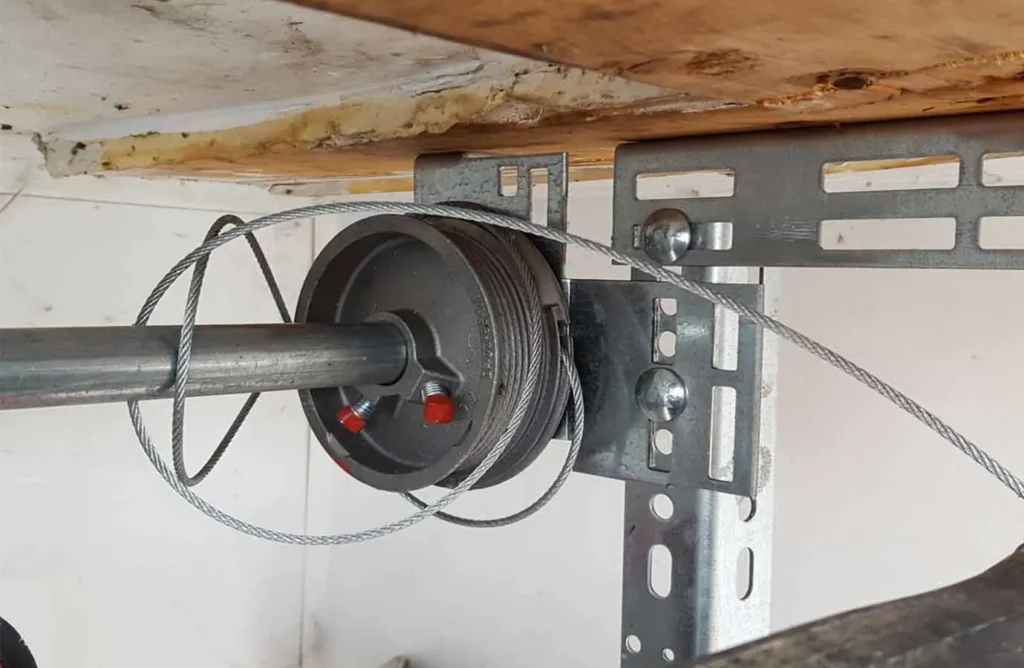
- Lift cables are tightening unevenly along the drum system
- Support brackets shifting slightly along mounting points
- Roller brackets pulling against track edges
- Increased tension affecting the bottom of your door during lifting cycles
- Hardware vibration appears during opening or closing
Clopay explains that garage door cables support the door’s weight alongside the springs, and damage or uneven tension in these cables can quickly affect door balance and place additional strain on surrounding hardware.
Garage Door Openers Struggling to Lift the Door
Opener systems are designed to guide movement rather than carry the full door weight, which means mechanical imbalance can quickly place additional strain on the opener motor.
Signs that the opener may be struggling include:
- Delayed response when the opener begins lifting the door
- Motor noise is increasing during opening cycles
- The door pauses mid-travel before reaching the fully open position
- Extra vibration is developing near the opener rail system
- Slower closing cycles caused by resistance along tracks
Added strain on the opener motor often indicates that other components within the garage door system require inspection.
Safety Sensors and Auto-Reverse Systems Losing Reliability
Proper alignment allows safety sensors to detect objects across the door opening, and skipped maintenance may affect the system’s accuracy in recognizing obstructions.
Changes in sensor performance may appear as:
- Misaligned safety sensors are failing to detect objects in the door’s path
- Sensor lights blinking or turning off unexpectedly
- Door reversing before reaching the floor
- Dust, moisture, or debris blocking the sensor beam
- Sensor brackets are shifting slightly near the floor
Unexpected door reversal during closing often points to sensor alignment or travel-setting problems, a behavior that Clopay notes can occur when the opener detects resistance or obstruction signals within the system.
Safety Risks Linked to Skipping a Garage Door Safety Check
Skipping a routine garage door safety check can allow hidden mechanical problems to develop, increasing the risk of accidents during daily door operation.
Safety risks that may develop include:
- Sudden door movement if worn springs or cables lose balance during lifting cycles
- Failure to detect objects when safety sensors become misaligned or blocked
- Unexpected door reversal or incomplete closing caused by travel setting or sensor problems
- Loose hardware or worn components are creating unstable door movement along the tracks
- Falling door sections if damaged brackets, hinges, or rollers weaken over time
Safety problems like these can increase the risk of injury or property damage when using a garage door.
Repair Problems That Can Appear When Maintenance Is Delayed
Delaying routine garage door maintenance can allow minor mechanical issues to spread across multiple parts of the system and eventually lead to more complex repair needs.
Common repair problems that may appear include:
- Worn rollers and hinges increase friction and affect smooth door movement
- Loose hardware and shifting brackets are creating alignment problems along the tracks
- Damaged springs or cables are placing additional strain on the lifting system
- Garage door opener strain as the motor works harder to lift an unbalanced door
- Rust and corrosion forming on metal parts exposed to humidity or moisture
To prevent these repair problems, read our guide on How Often Should You Maintain a Garage Door?, which explains the maintenance intervals homeowners often follow to keep the system operating properly.
Environmental Factors in Gainesville That Can Accelerate Garage Door Wear
Local climate conditions in Gainesville can gradually affect garage door components, especially when moisture, heat, and outdoor debris interact with the system’s metal parts.
Environmental factors that may accelerate wear include:
- High humidity and moisture contribute to rust on springs, hinges, and brackets
- Frequent temperature changes affect metal expansion and door alignment
- Outdoor debris and dust are increasing friction along rollers and track surfaces
- Heavy rain exposure allows moisture to collect near the bottom of the door
- Pest activity and dirt buildup are interfering with sensor areas and moving hardware
Environmental exposure like this can gradually increase mechanical wear on garage door components over time.
Situations Where Professional Garage Door Maintenance Becomes Necessary
Certain garage door problems signal that routine upkeep may no longer be enough, and professional maintenance becomes necessary to restore proper system function.
Situations that often require professional garage door maintenance include:
- Persistent unusual noises such as grinding, rattling, or loud squeaking during operation
- Uneven door movement or visible misalignment along the track system
- Loose or damaged hardware affecting hinges, brackets, or roller mounts
- The garage door opener strain is causing slow lifting or a delayed response
- Safety sensors are malfunctioning and failing to detect objects in the door’s path
Slow lifting cycles or delayed motor response may indicate opener strain, which can require garage door installation if the system no longer operates properly.
Don’t Let Skipping Garage Door Maintenance Lead to Bigger Problems
Ignoring routine care can allow small mechanical changes to develop inside a garage door system, eventually affecting springs, rollers, cables, and other moving parts. Following a consistent garage door maintenance checklist helps homeowners detect early signs of wear before they lead to costly repairs or unexpected system failure.
Alachua Door Company helps homeowners throughout Gainesville, FL, maintain garage door systems through inspections, tune-ups, and preventive services that support long-term performance and peace of mind. If your garage door has begun showing signs of wear or unusual operation, contact us or give us a call today to schedule professional maintenance for your garage door system.
Frequently Asked Questions
Can skipping maintenance affect garage door warranty coverage?
Yes. Some manufacturers require routine servicing or inspections to maintain eligibility for the warranty. Missing recommended maintenance can sometimes lead to warranty limitations if damage is linked to neglected upkeep.
Does garage door maintenance help prevent emergency repairs?
Yes. Regular inspections can detect worn hardware, loose components, or developing mechanical strain before major problems occur. Addressing these early signs helps reduce the likelihood of sudden system failures that may require urgent repairs.
Which garage door parts wear out the fastest without maintenance?
Rollers, hinges, springs, and cables often wear out the fastest. Constant movement, friction, and repeated lifting cycles place ongoing stress on these parts, which can gradually affect their performance without regular servicing.
Can a lack of maintenance affect the balance of a garage door?
Yes. Springs and cables control the door’s counterbalance, and wear in these components can cause the door to become uneven during operation. Poor balance places additional strain on the opener and other moving parts within the system.
Does garage door maintenance help extend the lifespan of the opener?
Yes. A properly balanced door reduces the workload placed on the opener motor during opening and closing cycles. Lower strain on the motor and drive system can help extend the lifespan of the garage door opener.
Can poor garage door maintenance affect home security?
Yes. Worn hardware, damaged panels, or misaligned tracks may prevent the door from closing securely. Regular inspections help ensure the door seals properly and continue protecting the garage entry point.
How do Florida weather conditions affect garage doors?
Humidity and frequent rain can introduce moisture that contributes to rust on springs, hinges, and metal hardware. Temperature changes and debris buildup may also affect alignment and friction along the track system.
Can a garage door still operate if maintenance is skipped?
Yes. Many garage doors continue to function even as wear develops gradually within the system. Homeowners often begin searching for garage door maintenance near me once unusual noises, uneven movement, or performance changes begin to appear.
What sounds indicate a garage door needs professional attention?
Grinding, scraping, or loud squeaking noises often indicate mechanical strain within the system. Persistent sounds can signal worn rollers, loose hardware, or friction between moving parts that may require professional inspection.