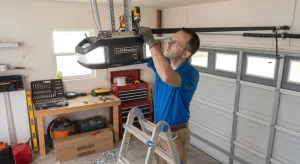
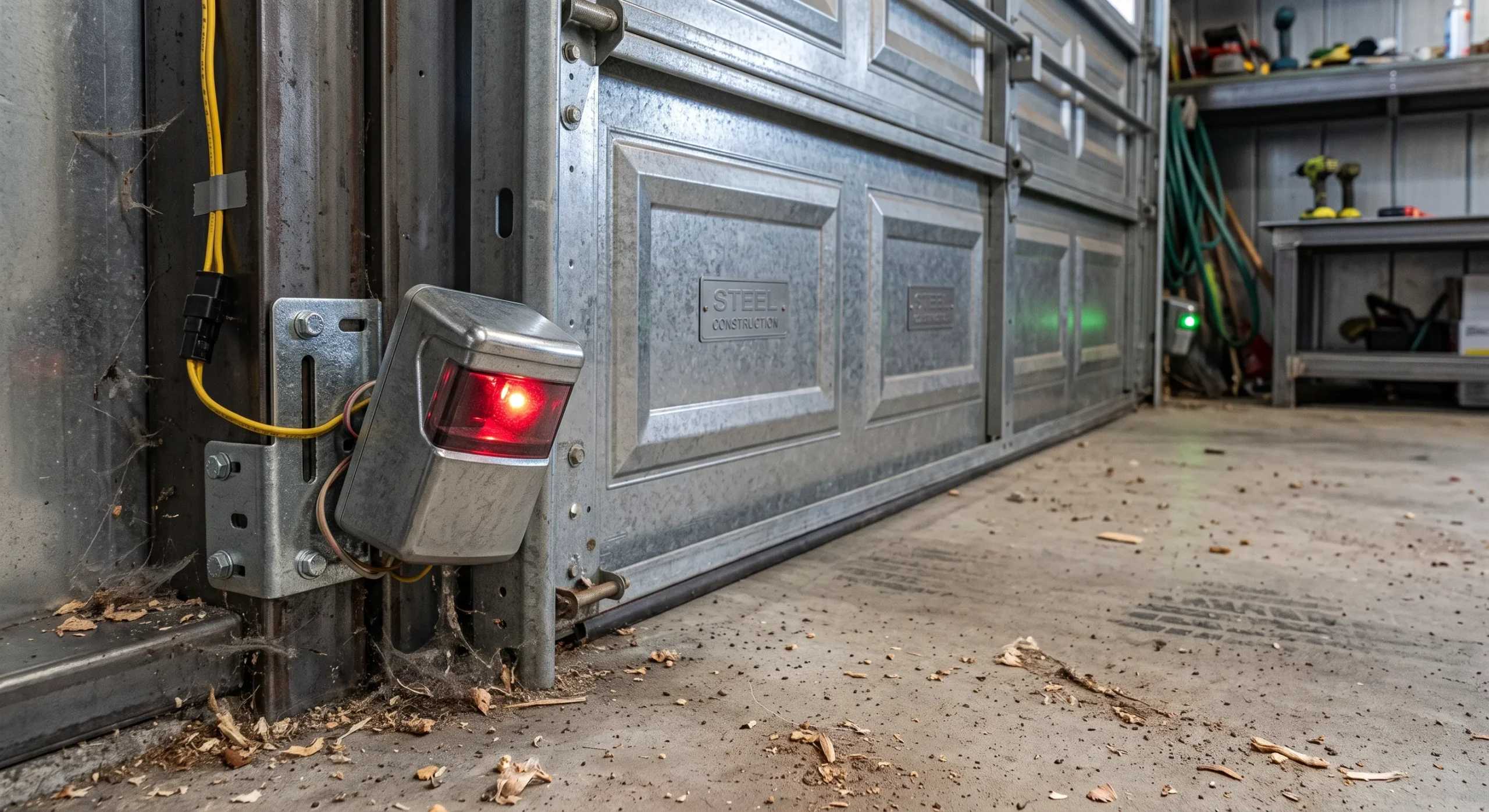
Garage door sensor lights most often change color due to sensor misalignment, dirty lenses, sunlight interference, or wiring issues, and each of these can leave a slightly different clue. Homeowners tend to notice the color shift right away, but understanding what it actually points to takes a bit more context and attention.
A color change on a garage door sensor can be caused by something as minor as a dusty lens or as serious as a deeper wiring issue that requires professional garage door repair by a trained technician. Knowing what typically causes the shift makes it much easier to address the problem before it affects how the door operates.
Why Do Garage Door Sensors Matter?

Garage door safety sensors sit near the bottom of the track on both sides of the door and work together to detect anything in the door’s path before it closes, giving the opener the signal to stop or reverse when needed.
Here is why these sensors play such an important role in everyday use:
- Detects people, pets, or objects crossing the door’s path before it closes.
- Sends a stop or reverse signal to the opener the instant the beam breaks.
- Works continuously every time the door cycles, without needing manual activation.
- Protects against injury and property damage during normal daily use.
- Signals a shift in system performance, the moment something changes.
To understand what a fully functioning sensor setup should look like before diving into what disrupts it, read our guide on Should Both Lights Be Green on Garage Door Sensors?, which explains what both lights working correctly actually indicate.
The Usual Colors of Garage Door Sensor Lights
Residential garage door openers rely on a simple color system to show sensor status, letting homeowners tell within seconds whether the door will respond normally.
| Sensor Light Color | What It Usually Means |
| Steady green on both sensors | The beam is unbroken, and the door will operate normally |
| Solid red or no light at all | The beam is blocked, or the sensor is not receiving power |
| Flashing red or orange | The beam is interrupted, or the alignment has shifted slightly |
| Flashing green | The sensor is functioning, but detecting brief interference nearby |
Brands like LiftMaster, Genie, and Chamberlain use slightly different patterns, so checking the opener’s manual confirms what each color means for that specific model.
What Causes Garage Door Sensor Lights to Change Color
Sensor Misalignment
Sensor alignment problems develop when either unit shifts out of position, often from a bump during yard work or accidental contact near the door.
Common patterns that point to misalignment include:
- Yard tools, bikes, or ladders brushing against the mounting bracket during regular use.
- A slight tilt in the sensor angle breaks the beam path between both units.
- Storms or strong winds loosen brackets that were never secured tightly.
- Vibration from repeated door cycles gradually shifts the alignment over several months.
- Accidental contact during cleaning or storage nudges one unit out of place.
To recognize how misalignment shows up beyond a simple color change, read our guide on Signs of Misaligned Garage Door Sensor Lights, which walks through the physical warning signs homeowners can spot before the issue gets worse.
Dirty or Obstructed Lenses
Dust, pollen, and general buildup on the sensor lens can scatter the infrared beam before it reaches the opposite unit.
Buildup on the lens tends to follow a few familiar patterns:
- Cobwebs collect quickly in garages that stay closed for long stretches.
- A thin film of pollen coats both lenses during high pollen season.
- Water spots form after rain blows in through an open door.
- Light dust lifts easily with a soft, dry cloth wipe.
- Heavier grime responds well to a bit of mild soap and water.
Wiping both lenses during pollen season or after heavy rain helps prevent this issue from recurring and keeps the beam clear between cycles.
Physical Obstructions Near the Track
Items placed too close to the door’s path can block the beam between the two sensor units without damaging the hardware itself.
Obstructions near the sensor area tend to show up as:
- Trash cans or storage bins parked right along the track.
- Bikes, tools, or ladders leaning directly into the sensor’s line of sight.
- Small debris or fallen leaves settling right at sensor height.
- Boxes stacked temporarily near the door during a move or project.
- Rodents nesting near the base of the door in quieter garages.
Older garage door installations often place sensors closer to storage areas than current standards recommend, raising the odds of obstruction.
Sunlight Interference
Direct sunlight hitting the receiving sensor at certain times of day can overpower the infrared beam, causing the light to blink.
Sunlight-related interference often shows up through:
- East or west-facing garages catch direct sun for part of the day.
- Symptoms shift noticeably depending on the season and time of day.
- A slight downward tilt in the sensor angle helps reduce glare.
- Overhangs or shade structures lower how much direct light reaches the lens.
- Reflective surfaces nearby occasionally bounce extra light onto the sensor.
Homeowners in Gainesville often notice this pattern more in certain months, when the sun sits lower on the horizon during specific hours of the day.
Loose or Damaged Wiring
Wiring problems can cause flickering or inconsistent light colors even when the lens and alignment are both in proper condition.
Wiring-related symptoms typically include:
- Intermittent flickering caused by loose terminal connections at the sensor base.
- Frayed or exposed wiring visible near the bottom of the track.
- Gradual corrosion building up from long-term moisture exposure.
- Rodents chewing through exposed wiring in garages with less activity.
- Connections working loose over time from constant door vibration.
If the door stops responding entirely, emergency garage door repair is worth calling in rather than waiting to see if it clears up on its own.
Incompatible LED Bulbs Nearby
LED bulbs installed in the opener light fixture can sometimes emit radio frequencies that interfere with the low-voltage signal used by the sensors.
Bulb-related interference tends to follow this pattern:
- Interference appears soon after switching to a new LED bulb.
- Opener manuals often include a list of manufacturer-approved bulb types.
- Flickering resolves quickly once a compatible bulb replaces the original.
- Older opener models are more likely to conflict with certain bulb frequencies.
- Incandescent bulbs rarely cause this same type of interference.
Reviewing the opener manual before installing new bulbs helps rule out this often overlooked cause right away.
Aging or Failing Sensor Units
Electronic components naturally wear out over time, especially in garages exposed to fluctuating temperatures year-round.
Aging sensors tend to show a few recognizable patterns:
- Inconsistent colors appear despite a clean lens and correct alignment.
- Symptoms develop gradually before becoming noticeably more frequent.
- Exposure to extreme heat or cold accelerates wear on internal components.
- Response delays show up during otherwise normal open and close cycles.
- Garage door replacement becomes the more practical option as symptoms continue to worsen.
Tracking how often these symptoms appear over time helps determine whether a sensor is nearing the end of its service life.
How to Troubleshoot a Sensor Light Color Change
Before assuming the worst, a few simple checks can help narrow down what might be causing a garage door sensor light to change color.
Here are simple troubleshooting steps to try first:
- Wipe both sensor lenses gently with a soft cloth to remove dust or cobwebs.
- Check the sides of the door to confirm nothing blocks the beam between units.
- Note whether the color change happens at a specific time of day.
- Test the wall button and the transmitter separately to compare their responses.
- Inspect the mounting brackets to confirm both sensors face each other evenly.
To pinpoint exactly what to inspect once a color change first appears on either sensor, read our guide on What to Inspect When Garage Door Sensor Lights Change Color, which breaks each check down step by step for homeowners.
Should You Call a Pro to Change the Color of a Garage Door Sensor?
A sensor color change is not always something a homeowner can resolve on their own, and knowing when to call in help saves time.
Here is when calling a professional makes the most sense:
- Basic checks, such as wiping the lens or clearing obstructions, do not resolve the issue.
- The color change keeps returning within a day or two of a temporary fix.
- Wiring damage or exposed connections are visible near the sensor base.
- The door reverses or stops mid-cycle without any clear obstruction present.
- Both sensors stay misaligned even after adjusting the mounting brackets.
Bringing in a professional at this point will confirm the exact cause of the color change and outline the most practical way to resolve it going forward.
How Professional Repair Resolves Garage Door Sensor Color Issues
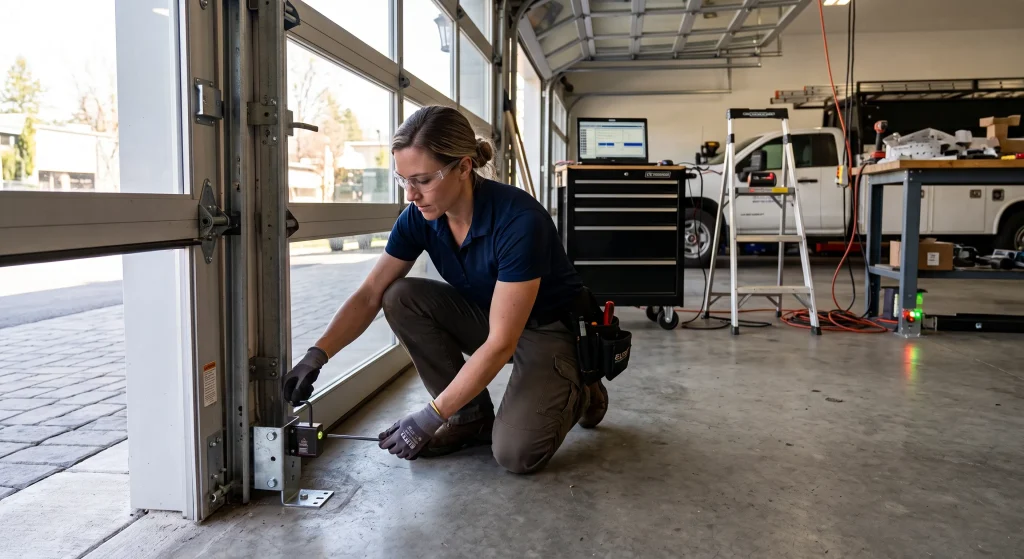
A trained technician follows a clear diagnostic process to trace a sensor color change back to its actual cause and confirm the correct fix.
Here is how professional repair typically resolves the issue:
- Testing sensor alignment and adjusting brackets to restore a proper beam path.
- Checking all wiring connections for looseness, corrosion, or damage.
- Cleaning or replacing lenses affected by buildup or wear.
- Running the opener through a reset to confirm the fix holds.
- Replace sensor units that show signs of internal failure.
Professional attention keeps garage door safety sensors working as intended, leaving homeowners with one less thing to worry about.
Resolve Common Causes of Color Changes in Garage Door Sensor Lights With Expert Help
Garage door sensor lights shift color for specific reasons, and recognizing those reasons makes the signal far easier to act on. Misalignment, dirty lenses, wiring issues, and aging components account for most cases, and each one follows a pattern that becomes easier to spot with a little familiarity.
Alachua Door Company brings years of hands-on experience with a wide range of opener brands and models to every sensor-related issue across Gainesville and the surrounding area. Contact us or give us a call today, and let our team confirm exactly what a color change means for your specific setup.
Frequently Asked Questions
Is it normal for one sensor light to be brighter than the other?
No. A noticeable brightness difference between the two units often points to a lens issue, a slight power difference, or one sensor wearing faster than the other. It is worth a closer look rather than assuming it will even out on its own.
Can pets walking near the sensor cause the light to change color?
Yes. A pet crossing close to sensor height, even briefly, can interrupt the beam enough to trigger a temporary color change. The light typically settles back to normal once the pet moves away and the beam path clears.
Is a blinking sensor light different from one that changes color?
Yes. A blinking light usually indicates an active obstruction crossing the beam at that exact moment, while a color change reflects a broader shift in the sensor's operation. Recognizing the difference helps determine whether the cause is temporary or warrants a closer look.
Do newer garage door openers use different sensor light colors than older ones?
Yes. Newer opener models sometimes follow a different color pattern than older units, especially across manufacturers and hardware generations. Checking the manufacturer’s guide confirms exactly what each light means for that specific setup.
Does every garage door brand use the same sensor light colors?
No. Brands such as LiftMaster, Genie, and Chamberlain each use a slightly different color system to indicate sensor status. A pattern that means one thing on one brand can mean something else entirely on another.
Can a sensor color change happen even if the door still opens and closes normally?
Yes. A color change can appear well before any noticeable shift in how the door actually operates day-to-day. This makes it a useful early signal worth paying attention to, even when everything still seems fine on the surface.
Should I try to fix a color change in the sensor myself or call for garage door sensor repair?
It depends on the cause. Simple issues like a dirty lens or a minor obstruction are usually manageable without help, but wiring problems or recurring misalignment are better handled by a professional garage door sensor repair service.
Does garage door sensor repair cost the same for every type of issue?
No. The garage door sensor repair cost typically depends on the cause of the issue, the age of the opener, and whether any additional components need attention. Getting an accurate answer usually requires a professional to take a direct look at the system.
Can a color change indicate a problem with the garage door safety sensor itself rather than something external?
Yes. A garage door safety sensor nearing the end of its service life can show inconsistent colors even when the lens is clean and the alignment is correct. This kind of internal wear tends to develop gradually, which is part of why it can be easy to overlook at first.